
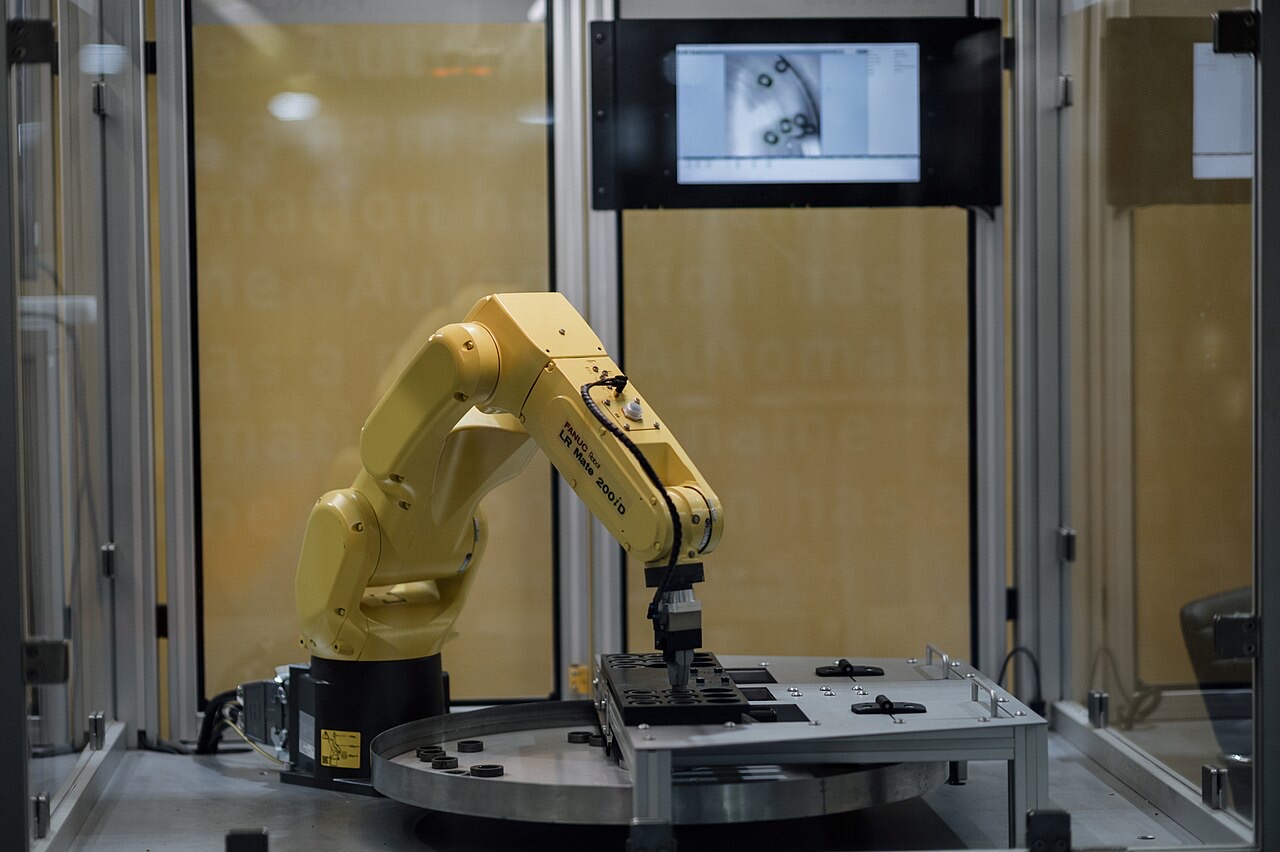
An agentic workflow is a design where an LLM works toward a specific goal by itself through a loop of planning, acting, and observing. Unlike standard chatbots that provide one-off replies, workflows handle tasks with variable steps that are often unknown in advance.
What are Agentic Workflows?
To understand agentic workflows, you must first understand the difference between a simple conversation and a business process. When you ask a chatbot, "What are my clinic hours?", you get a single answer. This is a one-off interaction. However, if you tell an agent, "Fill next week's clinic slots by checking cancellations, messaging waitlisted patients, and reporting the results," you are describing a goal that requires a sequence of actions.
An agentic workflow acts as the "outer shell" of your software system. It provides a predictable structure—a set of rules and boundaries—where flexible, intelligent steps can happen inside. This structure ensures that even if the AI takes a creative path to solve a problem, it stays within the guardrails you have defined.
In a real-world business setting, such as a small accounting firm in Mumbai, an agentic workflow might be tasked to "Reconcile last month's GST invoices against the bank statement and flag mismatches." This isn't a single question; it is a complex mission. The workflow must read files, query a ledger, compare numbers, write a report, and perhaps even ask an accountant about an odd entry. This ability to handle multi-step, variable tasks is what separates a true AI agent from a basic chatbot.
The Core Agent Loop
Every agent, no matter how sophisticated, runs on a fundamental cycle. This loop is the heartbeat of the system, turning a static model into an active worker. While the model provides the "thinking," the loop—which is written in ordinary, reliable code—provides the "doing."
- Goal: The process begins when the system receives a task with a clear definition of "done," specific constraints, and a defined budget (such as a limit on how much money can be spent on API tokens).
- Plan: The model decides the next step or drafts a full plan for the task. It looks at the goal and determines what information it lacks.
- Act: The agent calls a tool. This could be a database query, an API call to a service like WhatsApp, or writing a new file to a disk.
- Observe and Verify: The system reads the result of the tool. It checks: Did the invoice total match the bank statement? Did the API return an error? It verifies if the action was successful.
- Remember: The outcome is recorded. This "memory" allows the agent to use what it learned in step one to inform step five, or to avoid making the same mistake in a future run.
- Repeat or Stop: Based on the observation, the agent decides to continue, re-plan, ask a human for help, or finish the job and report the results.
Essential Components of a Workflow
Building a production-grade system requires more than just an API key from an LLM provider. You need a complete agentic architecture consisting of several moving parts:
- Models: The decision-maker. It reads the history and tool results to choose the next action. For efficiency, many builders use a strong, expensive model for complex planning and a smaller, cheaper model for routine tasks like classifying a message.
- Tools: These are functions the model can call. Examples include
search_invoices(gstin, month),send_whatsapp(template_id, phone), orcreate_booking(slot_id, patient_id). A good tool has a narrow scope and provides helpful error messages. - Memory:
- Working memory: The current context window (the immediate goal and recent steps).
- Episodic memory: A record of past runs, helping the agent avoid repeating mistakes.
- Long-term memory: Retrieved facts, policies, or customer history.
- Verifier: A mechanism to check work. This can be a piece of code (checking if a sum is mathematically correct), a second model acting as a reviewer, or a test suite. Whenever possible, use cheap, deterministic code checks over model judgement.
Common Workflow Patterns
You do not need to invent a new way of thinking for every task. Most effective systems use established patterns to manage how the agent thinks and acts. Understanding these is key to building multi-agent systems.
| Pattern | How it Works | Best Use Case |
|---|---|---|
| ReAct | Interleaves reasoning steps with tool calls. | Open-ended research or troubleshooting. |
| Plan-and-Execute | Writes a full plan first, then executes it, re-planning only upon failure. | High-stakes tasks like migrating 300 product listings. |
| Router | A small model sends inputs to specialized paths. | Directing billing queries to one flow and complaints to a human. |
| Orchestrator-Workers | An orchestrator breaks a task into subtasks for workers. | Editing multiple files in a codebase simultaneously. |
| Evaluator-Optimizer | One step produces a draft; another critiques it for revision. | Writing content where criteria (like citations) are concrete. |
Ensuring Reliability and Safety
When an AI agent has the power to "act" (like sending an email or moving money), safety becomes the highest priority. You cannot rely on the model to "promise" to be safe; you must enforce safety through the software architecture.
Guardrails and Approvals
Guardrails are rules enforced outside the model. This includes spending limits, blocked domains, or output filters. For high-risk actions, use a Human Approval point. This is a pause in the workflow where a person must review the proposed action and click "approve" before the code executes the tool.
Durability and Auditability
In a business environment, a task might take days. An agent might need to wait for a manager to approve a refund. A production-grade system must be durable, meaning it uses checkpoints and persistent storage so the workflow can survive a server restart or a long wait without losing its progress. Furthermore, every action should land in a hash-chained audit log, creating a record that cannot be quietly edited after the fact.
When to Use Workflows vs. Agents
A common mistake for builders is trying to make everything an autonomous agent. This often leads to unpredictable costs and unreliable results. The most effective production systems are hybrids.
A hybrid system uses a predictable workflow shell—a predefined code path that you can reason about and control—and places flexible agentic steps inside it where intelligence is actually needed.
- Use Workflows (Predefined Code): For high-stakes, repetitive tasks where the steps are known, such as calculating payroll or processing a standard return.
- Use Agents (Autonomous Reasoning): When the steps required to reach a goal are unknown in advance, such as investigating a complex customer complaint or performing market research.
By combining the reliability of traditional software with the reasoning of an AI agent, you create systems that are both powerful and safe enough for professional business operations.
Frequently Asked Questions
- What is the difference between a chatbot and an agentic workflow?
- A chatbot typically provides a single reply to a message, whereas an agentic workflow executes a multi-step process to achieve a goal, often using tools and reasoning to decide its own next steps.
- Do I need a different model for every step in a workflow?
- Not necessarily. Many systems use a strong model for complex planning and a smaller, cheaper model for routine tasks like classifying messages or routine steps.
- How do you prevent an agent from spending too much money?
- You can implement guardrails such as step budgets, token limits, and spending caps that are enforced by the code outside of the model's control.
- What is the purpose of a 'verifier' in a workflow?
- A verifier checks the agent's work—for example, by running a piece of code to see if a sum is correct—to ensure the output meets the required criteria before it is finalized.
- Can agentic workflows handle long-running tasks?
- Yes, by using durable checkpoints and persistent memory, workflows can pause for human approval or wait days for external events without losing their progress.
Questions people ask
What is the difference between a chatbot and an agentic workflow?
A chatbot typically provides a single reply to a message, whereas an agentic workflow executes a multi-step process to achieve a goal, often using tools and reasoning to decide its own next steps.
Do I need a different model for every step in a workflow?
Not necessarily. Many systems use a strong model for complex planning and a smaller, cheaper model for routine tasks like classifying messages or routine steps.
How do you prevent an agent from spending too much money?
You can implement guardrails such as step budgets, token limits, and spending caps that are enforced by the code outside of the model's control.
What is the purpose of a 'verifier' in a workflow?
A verifier checks the agent's work—for example, by running a piece of code to see if a sum is correct—to ensure the output meets the required criteria before it is finalized.
Can agentic workflows handle long-running tasks?
Yes, by using durable checkpoints and persistent memory, workflows can pause for human approval or wait days for external events without losing their progress.