
By 2030, the workplace will shift from humans using tools to humans supervising autonomous agents that execute complex, multi-day workflows. This transition moves us from simple chatbots to an "agentic economy" where AI handles routine business transactions.
The Rise of the Agent Economy
By 2030, a meaningful share of routine business transactions will be negotiated agent-to-agent. Instead of a human spending hours on manual coordination, AI agents will handle tasks like reordering stock, booking freight, or comparing supplier quotes. These agents will operate within specific limits set by humans to ensure commerce remains under control.
The transition from "chatting" to "doing" is already underway. While today's agents often finish tasks that take only a few minutes, the next phase involves durable workflows. These are agents that follow up with a lead for two weeks, reconcile accounts every night, or prepare a tender over several days. These workflows require memory, retries, schedules, and checkpoints where a human can approve the next step.
As these systems become more common, the primary challenges for businesses will not be the intelligence of the AI, but rather:
- Identity: How an agent proves who it is acting for.
- Payment Authority: How an agent is legally and technically allowed to spend money.
- Liability: Who is responsible when an agent makes a mistake in a transaction.
From Separate Apps to AI Operating Systems
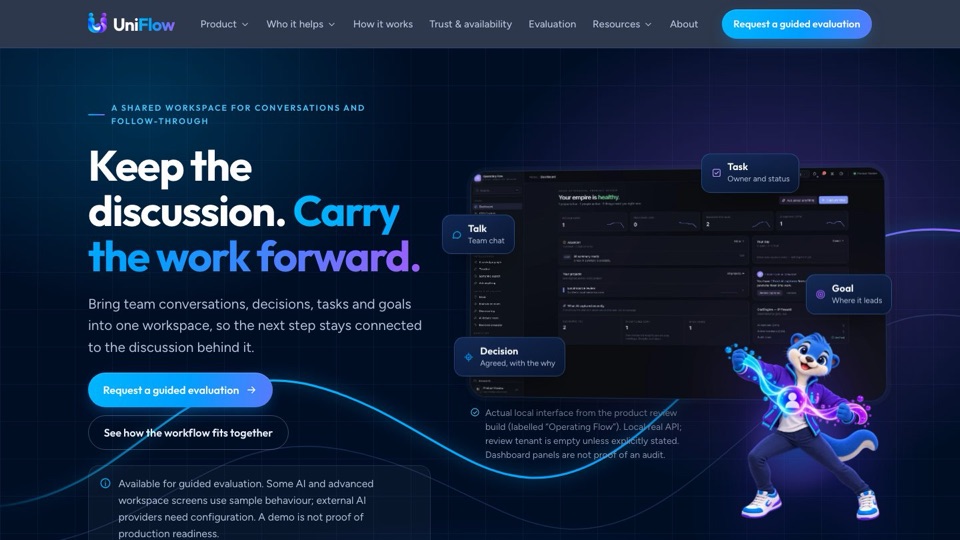
Currently, most businesses operate by jumping between a dozen different, disconnected apps. By 2030, this model is expected to change. Companies will move toward an AI operating system—a single layer that holds the company's data, rules, and agents in one place.
This operating system will act as the central nervous system for the business, driving sales, managing accounts, tracking inventory, and handling customer support. Instead of manually moving data from a sales tool to an accounting tool, the AI operating system will allow these processes to flow seamlessly. The winners in this new era will be the software systems that owners can trust with real money and real customers.
| Feature | Traditional App Stack | AI Operating System (2030 Forecast) |
|---|---|---|
| Data Management | Fragmented across many silos | Unified layer holding all company data |
| Workflow Style | Manual "copy-paste" between tools | Autonomous, end-to-end execution |
| User Interaction | Human clicks buttons in every app | Human supervises agents and exceptions |
The Emergence of Verification and Audit
As AI agents begin to act on behalf of humans—spending money or contacting customers—a new profession will emerge: AI audit, evaluation, and assurance. Just as financial auditing is essential for modern corporations, AI auditing will become necessary to ensure autonomous systems behave as they are claimed to behave.
These professionals will be responsible for:
- Testing agents to ensure they follow complex instructions.
- Reviewing logs to see exactly why an agent made a specific decision.
- Signing off on system behavior to provide assurance to regulators or large buyers.
Verification becomes essential because as agents gain more autonomy, the risk of "prompt injection"—where hidden instructions in a document hijack an agent—becomes a real security concern. Companies will need to ensure that an agent's "authority" is strictly limited to prevent unauthorized actions.
The Ladder of Autonomy
Organizations will not hand over all their work to AI overnight. Instead, they will climb a "ladder of trust," moving each process up one rung only when the level below has proved reliable. Understanding this ladder is vital for any builder or business owner looking to implement AI.
- Assist: The agent drafts a document or an email; a human reads every word and hits "send." Most businesses are currently at this stage.
- Act with approval: The agent prepares a specific action, such as a payment, a refund, or a customer email, and waits for a person to click "approve."
- Act within limits: The agent acts alone for tasks below a certain threshold (for example, processing refunds under a fixed amount) and only escalates larger issues to a human.
- Run the process: The agent owns a whole workflow end-to-end. Humans no longer check every step but instead review summaries, error rates, and exceptions.
By the early 2030s, it is forecast that a significant portion of back-office work in well-run companies will sit on this highest rung. To move up this ladder, businesses must provide clear logs, measured error rates, and a reliable way to undo mistakes.
What Stays Human in 2030
As AI makes technical and repetitive tasks cheaper, human-centric qualities will actually become more valuable. When anyone can generate a polished, professional proposal in seconds using AI, a "polished" document is no longer a competitive advantage. Instead, the competitive edge moves to:
- Trust and Reputation: A trusted name and a real relationship with a customer.
- Judgment and Taste: Deciding "what is worth doing at all" and ensuring the output meets high standards.
- Responsibility: AI can propose an action, but a human must still own the outcome.
- Leadership and Care: Complex negotiation, teaching, and physical or emotional care.
The most important skill for the future is not just knowing how to use AI, but having the deep domain expertise required to check the AI's work. You can only effectively supervise an agent if you understand the field it is working in. For more on how roles will change, see our guide on AI skills for 2030.
The Opportunity for Indian Small Businesses
Small and medium businesses in India are uniquely positioned to benefit from the agentic shift. Many of these businesses operate through phone calls, WhatsApp, and paper ledgers. Because these businesses often cannot afford large teams for sales follow-up or customer service, AI agents can act as "force multipliers."
Practical examples for an Indian small business owner include:
- Voice-first automation: Using voice agents in local languages like Hindi, Marathi, or Tamil to answer calls, take orders, and explain bills.
- Automated follow-ups: An agent that messages every lead on time in the customer's preferred language.
- Instant paperwork: Generating quotations and invoices in minutes based on past orders and price lists.
- Continuous bookkeeping: Keeping GST paperwork and books current continuously, rather than in a rush at the end of the month.
While the technology moves fast, the core principles of business remain the same. As we look toward the future of work in 2035, the businesses that win will be those that use AI to handle the routine, while doubling down on the human relationships that drive local commerce. To understand the broader economic shifts, read our analysis on AI and jobs in India in 2030.
Questions people ask
Will AI take all the jobs by 2030?
AI is more likely to take over specific tasks—like data entry or report assembly—rather than entire jobs. Most roles will evolve to focus on supervising the systems that perform those tasks.
What skills will be most important in 2030?
Key skills will include clear thinking and writing (to brief agents), deep domain expertise (to check AI work), process design, and human-centric skills like negotiation and care.
How will AI agents handle business transactions?
Agents will use protocols to negotiate and transact with other agents for things like freight and stock, but they will operate within limits and identities set by humans.
What is the main risk of using AI agents in business?
Security is a major risk, specifically 'prompt injection' where hidden instructions hijack an agent. Using least privilege, approval steps, and audit logs is essential to mitigate this.
How can a business prepare for the agentic shift?
Start by picking one repetitive, costly process, pilot an agent with human approval at every step, and organize your data so agents have a reliable foundation to run on.