
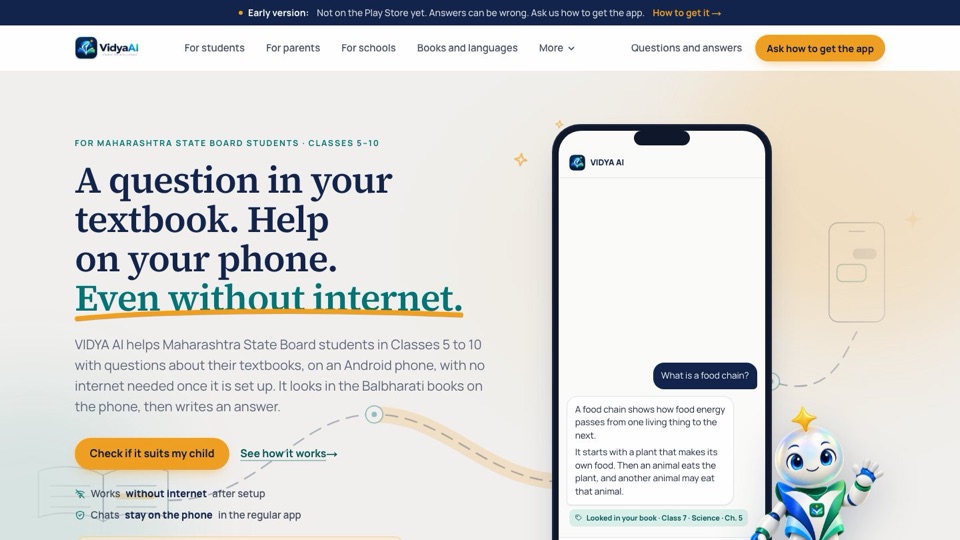
Indian language AI is shifting focus from text-based English interfaces to voice-first interactions in regional languages like Hindi, Marathi, and Tamil. This movement aims to make technology accessible to millions of users who prefer speaking over typing.
For many users in India, the biggest shift in AI isn't just intelligence—it is language and voice. We are moving toward a world where speaking in Hindi, Marathi, or Tamil is the primary way to interact with technology. This transition is essential for bridging the digital divide and ensuring that the benefits of AI reach every corner of the country.
The Shift to Voice and Local Languages
The traditional way of interacting with computers—typing in English—is not the reality for a vast portion of the Indian population. As digital literacy grows, the interface is changing to match how people actually communicate.
- Many first-time AI users prefer speaking in Hindi, Marathi, or Tamil over typing in English.
- The future of Indian AI lies in voice-first interfaces that handle local dialects.
- According to current reasoning from today's trends, voice agents are expected to become common small-business tools by 2028.
Practical Applications for Indian Business
For a small business owner, AI is most useful when it handles the messy, repetitive parts of daily operations. In the Indian context, this means handling the specific documents and communication styles used in local markets.
Imagine a retail shop owner in a small town. Instead of navigating complex menus, they can simply speak to their device. This capability allows for seamless integration into existing workflows like WhatsApp or GST-compliant accounting.
- Communication: Translating customer messages into Marathi, Hindi, and other regional languages before they are sent.
- Customer Service: Voice agents that can answer calls, take orders, and explain bills in local languages.
- Documentation: Generating business documents like GST invoices as first-class outputs in the user's language.
| Feature | Traditional Digital Tool | Language-First AI Agent |
|---|---|---|
| Input Method | Typing in English | Speaking in regional dialects |
| Output Format | Text/Email | Voice, WhatsApp, or GST Invoices |
| Workflow | Manual data entry | Automated task completion |
From Chatbots to Multilingual Agents
We are seeing a move away from simple chatbots that just provide answers toward "agents" that actually perform work. While a chatbot might explain how to make an invoice, an agent actually creates the file and sends it.
This evolution is part of a broader trend in the evolution of AI, where models are moving from just "thinking" to actually using tools to finish tasks. In the Indian market, this means agents that understand the specific context of local business cycles.
- Task Completion: Moving beyond simple chat to agents that can complete tasks like sending a translated message on WhatsApp.
- Contextual Awareness: Agents that understand the context of Indian business workflows, such as following up on unpaid invoices.
- Data Transformation: The ability to turn a spoken request in a local language into a finished document or spreadsheet.
This shift is a key part of what experts see as the future of AI, where agents act as digital coworkers capable of running durable workflows.
The Future of Offline Voice AI
Connectivity remains a challenge in many parts of India. For AI to be truly useful in every village and small town, it cannot rely solely on a high-speed, constant internet connection.
Current research is looking at how to move heavy AI processing from giant data centers directly onto the user's hardware. This is a critical step for privacy and reliability.
- Offline Processing: Research is focused on fully offline, on-device voice processing for Indian languages.
- Connectivity Independence: This aims to allow voice-based AI to work even without an active internet connection.
- Privacy and Speed: On-device models will handle private, everyday tasks locally on phones and laptops.
As hardware becomes more powerful, these small, capable models will be able to handle complex local language tasks without ever needing to call a cloud server.
Sovereign AI and National Infrastructure
AI is no longer just a software concern; it is becoming a matter of national importance. Countries are increasingly treating compute and data as strategic national infrastructure.
India has taken a proactive stance on this through the IndiaAI Mission. This initiative is designed to ensure that the country has the resources to build its own AI future.
- Government Support: India's IndiaAI Mission (approved 2024) funds shared GPU capacity and Indian foundation models.
- Strategic Autonomy: Countries are increasingly treating compute and data as strategic national infrastructure.
- Cultural Alignment: The goal is to build models that respect local data and language requirements.
By building sovereign AI, India aims to ensure that its digital transformation is powered by models that understand its unique linguistic and cultural landscape.
Frequently Asked Questions
- Why is voice important for Indian language AI?
- Many first-time users prefer speaking in languages like Hindi or Tamil rather than typing in English, making voice the most natural interface.
- Can AI handle Indian business documents?
- Yes, modern agentic systems are being built to treat Indian documents, such as GST invoices, as primary outputs.
- Will AI work without an internet connection in India?
- Research is currently underway to enable fully offline, on-device voice processing for Indian languages.
- What is the IndiaAI Mission?
- Approved in 2024, it is a mission to fund shared GPU capacity and support the development of Indian foundation models.
- How will AI change small businesses in India?
- Based on current trends, voice agents that can take orders and explain bills in local languages are expected to become common small-business tools by 2028.
Questions people ask
Why is voice important for Indian language AI?
Many first-time users prefer speaking in languages like Hindi or Tamil rather than typing in English, making voice the most natural interface.
Can AI handle Indian business documents?
Yes, modern agentic systems are being built to treat Indian documents, such as GST invoices, as primary outputs.
Will AI work without an internet connection in India?
Research is currently underway to enable fully offline, on-device voice processing for Indian languages.
What is the IndiaAI Mission?
Approved in 2024, it is a mission to fund shared GPU capacity and support the development of Indian foundation models.
How will AI change small businesses in India?
By 2028, voice agents that can take orders and explain bills in local languages are expected to become common small-business tools.