
What is an AI Chatbot?
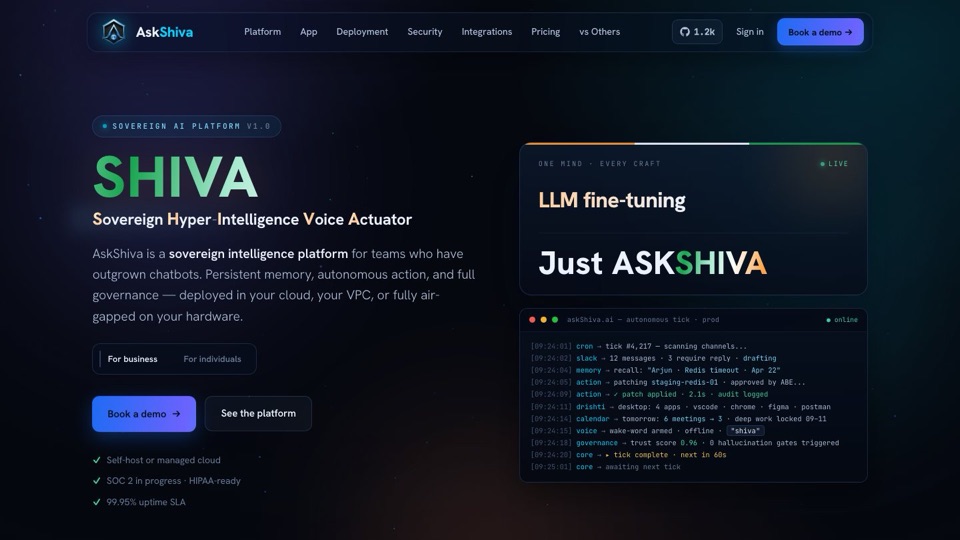
An AI chatbot is a digital interface that uses large language models to interact with you through text or voice. While standard chatbots simply provide information, an agentic AI chatbot like AskShiva uses specialized tools and agents to complete multi-step tasks, moving from just telling you how to do something to actually doing it for you by producing real files and documents.
To understand the difference, think about how you currently use technology in your business. Most chatbots are like a digital encyclopedia; you ask a question, and they give you a paragraph of text. They might explain the steps to create a GST invoice, but they won't actually create the file for you.
An agentic AI chatbot is different. It doesn't just give you information; it uses a set of tools to execute a plan. It can move from a conversation to a finished piece of work. If you ask for a document, it doesn't just describe the document; it builds the document, formats it, and hands it to you as a downloadable file.
This shift is what makes the technology useful for a busy business owner. Instead of spending time copying and pasting text from a chat window into a spreadsheet or a word processor, the chatbot handles the heavy lifting. It turns a conversation into a completed business output.
| Feature | Standard AI Chatbot | Agentic AI Chatbot (AskShiva) |
|---|---|---|
| Primary Goal | Provide answers and information | Complete tasks and produce work |
| Output Type | Text-based responses | Downloadable files (PDF, Sheets, etc.) |
| Workflow | Single-step interaction | Multi-step, autonomous execution |
| Action | Tells you how to do it | Does it for you |
From Chat to Finished Work
The real value for a business owner is the transition from a simple chat to finished work. In a traditional setup, you might use one tool to talk to a customer, another to calculate taxes, and a third to create an invoice. An agentic system brings these steps together into a single workflow.
Instead of just explaining a process, the chatbot executes it. Let's look at a practical example. Imagine you are a wholesaler in a busy market. You can tell the chatbot: "Make a GST bill for Sharma Traders, ₹18,400." The AI doesn't just explain how to make a bill; it calculates the tax lines and generates the actual invoice file for you to download.
This capability extends to many different types of business documents. The chatbot can generate:
- GST Bills: Properly formatted invoices with tax lines worked out.
- Spreadsheets: Structured data ready for your accounting.
- Web Pages: Simple digital layouts for products or services.
- Documents: Professional text documents for your records.
It can also handle complex, multi-step workflows that involve reading and writing data. For example, you could provide a spreadsheet from last month and ask the chatbot to "Make a one-page price list from last month's sheet." The AI reads the data from the sheet and produces a clean, professional page that you can immediately print or share with your customers.
This turns your computer from a tool you have to manage into an assistant that manages work for you. It is the difference between having a manual and having an employee who can actually perform the task.
Voice and Multilingual Capabilities
Business in India doesn't just happen through typing on a keyboard. It happens through voice notes, phone calls, and messages in various local languages. A tool that only understands English and text is not a complete tool for the Indian market.
AskShiva is designed with these realities in mind. You can interact via voice directly in your web browser. You can speak your request out loud, and the AI will hear you, process the command, and then speak the reply back to you. This makes the interaction feel natural, like talking to a real assistant.
Because it is built specifically for the Indian context, it supports a wide range of languages. This includes working in Marathi, Hindi, and other regional languages. This is crucial for seamless business communication. For instance, if you receive a customer message in Marathi, the AI can translate that message into your preferred language so you can understand it perfectly. It can then draft a reply and translate it back into Marathi to send to the customer.
This makes it an incredibly powerful AI voice assistant for anyone who needs to communicate across language barriers without spending time on manual translation.
Smart Memory and Context
One of the biggest frustrations with standard AI is that every time you start a new chat, the AI "forgets" who you are and what you do. You find yourself repeating the same instructions: "Remember, I am a wholesaler," or "Use my company logo for these documents."
AskShiva solves this through advanced memory. The chatbot keeps context across different conversations. It remembers the specific details of your business, such as your company name, your typical pricing structures, or even specific customer details like "Sharma Traders."
This memory allows for seamless follow-ups. If you have already created an invoice for a customer, you don't need to re-enter all their details to ask about a follow-up. You can simply say, "Remind me if they have not paid by Friday." Because the AI remembers the previous invoice and the customer, it knows exactly which transaction you are talking about.
This makes it feel less like a tool and more like a personal AI assistant that grows with your business. You stay in control of your data, as memory controls are being developed to give you full oversight of what the AI remembers and how it uses that information.
The Power of Agentic Architecture
The "intelligence" behind this system comes from what we call Agentic Architecture. Instead of one giant, single AI model trying to do everything, the system uses a team of specialized "agents" working together.
These agents follow a specific loop of logic: they plan the steps needed to complete your request, they act by using a specific tool (like a calculator or a file generator), and then they check their own results to ensure the work is correct. This self-checking process is vital for accuracy in business tasks.
The architecture includes several advanced technical features to ensure reliability:
- Model Routing: The system doesn't just use one AI model. It picks the best, most efficient model for the specific task you have requested.
- Fallback Systems: If one AI provider has an outage, the system automatically switches to another model. This means your work doesn't stop just because one service is down.
- Parallel Processing: For complex, multi-step tasks, the system can run multiple agents at the same time to speed up the process.
This is more than just a chatbot; it is a sophisticated AI assistant designed to handle the unpredictable nature of digital tools and ensure that your business processes keep moving forward.
Built for Real-World Workflows
We did not design this for tech enthusiasts; we designed it for the realities of Indian business. In India, business moves through WhatsApp, UPI, and GST-compliant documentation. An assistant designed for a different market might treat these as "special cases," but for us, they are the main focus.
A typical workday with AskShiva might look like this:
- You receive a request via WhatsApp.
- You tell the AI to draft an invoice based on that request.
- The AI prepares the GST invoice and also drafts a professional message to be sent back via WhatsApp.
- You review the work and send it off, all without leaving your primary workflow.
The goal is to turn a simple chat prompt into a completed, professional business output. Whether it is managing your accounts, communicating with customers in their native language, or organizing your product lists, the system is built to handle the actual work of running a company.
For those looking for a more integrated experience, our AI assistant app is designed to be part of your daily routine, ensuring that your "agentic" assistant is always available when a task needs to be finished.
Frequently Asked Questions
- Can an AI chatbot create actual files?
- Yes, AskShiva can produce downloadable files including documents, spreadsheets, and code.
- Does the chatbot support voice commands?
- Yes, you can speak in your browser and hear the AI's response read back to you.
- How does the chatbot handle different languages?
- It is built for Indian languages, allowing for translation and communication in languages like Marathi and Hindi.
- Will the chatbot remember my previous chats?
- Yes, it features memory that keeps context across conversations to reduce repeated instructions.
- What happens if the AI model fails?
- The system uses model routing with fallback, switching to another model so your work isn't interrupted by a single provider outage.

Questions people ask
Can an AI chatbot create actual files?
Yes, AskShiva can produce downloadable files including documents, spreadsheets, and code.
Does the chatbot support voice commands?
Yes, you can speak in your browser and hear the AI's response read back to you.
How does the chatbot handle different languages?
It is built for Indian languages, allowing for translation and communication in languages like Marathi and Hindi.
Will the chatbot remember my previous chats?
Yes, it features memory that keeps context across conversations to reduce repeated instructions.
What happens if the AI model fails?
The system uses model routing with fallback, switching to another model so your work isn't interrupted by a single provider outage.