
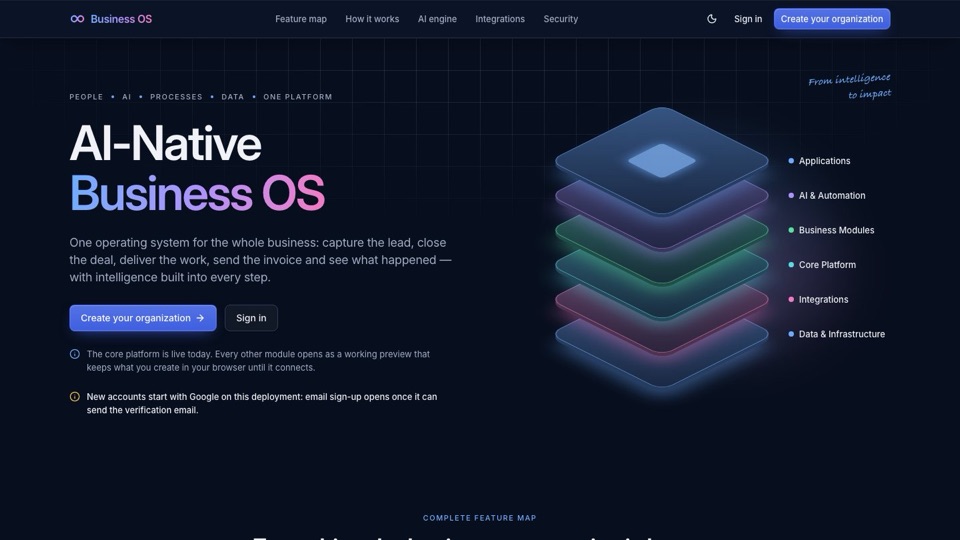
By 2026, AI jobs in India will move away from simple chat prompting toward managing "agentic workflows." Instead of just asking an AI for information, workers will oversee autonomous agents that can plan tasks, use business tools, and complete multi-step work like sending invoices.
The Shift to Agentic Workflows
The era of "talking to a chatbot" is evolving. In 2026, the Indian job market is moving toward managing agentic architecture. This means the value of a worker is no longer in knowing the perfect prompt to get a text response, but in designing systems where AI agents can act independently.
Future roles will focus on building agents that can plan a complex sequence of events, act by using software tools, check their own results for errors, and maintain context over long periods. We are seeing a fundamental shift in the required skill set: the focus is moving from "how to prompt" to "how to govern" AI agents.
In a traditional setup, a worker might use an AI to write an email. In an agentic setup, the worker designs a system where an AI agent monitors a WhatsApp inbox, identifies a customer request, checks a database for stock levels, and drafts a reply—all without being prompted for every single step.
Essential Skills for the 2026 AI Economy
To thrive in this new economy, professionals in India will need to move beyond basic digital literacy. The following skills are becoming critical for anyone building or managing business technology:
- AI-Native System Design: Understanding how to work in environments where AI agents have their own identities, permissions, and access levels.
- Governance and Auditing: The ability to manage agents that operate within strict security protocols and leave clear, searchable audit logs for every action they take.
- Workflow Integration: Knowledge of how to bridge the gap between an AI's "thought" and a real-world business result, such as integrating an agent into GST invoicing or WhatsApp communication flows.
As businesses move toward an AI-native operating system, the ability to ensure an agent follows the same rules as a human employee—such as staying within its assigned budget or only accessing specific customer files—will be a high-demand skill.
AI Roles in the Indian MSME Sector
The Micro, Small, and Medium Enterprise (MSME) sector in India is the biggest driver of this transition. Most Indian small businesses currently suffer from "data silos." A typical owner might run leads in a spreadsheet, talk to customers on WhatsApp, manage HR in a separate app, and handle invoices in a fourth tool. Nothing talks to anything else.
This creates a massive demand for professionals who can implement AI agents to bridge these gaps. We expect to see growth in several specific areas:
- Workflow Automators: Professionals who can move a business from manual spreadsheets to an automated CRM, such as the one being developed for AI-driven CRM systems.
- Implementation Specialists: Experts who can ensure an AI doesn't just "suggest" a task, but actually completes it—for example, generating a GST bill and sending it to a client automatically.
- Localization Experts: Specialists who can tailor AI agents to handle Indian languages. This includes translating customer messages into Marathi or Hindi and ensuring the AI understands the nuances of local business contexts.
As seen with tools like AskShiva, the goal is to solve the "gap between answer and done." A business owner in a place like Palghar doesn't want a paragraph explaining how to make an invoice; they want the invoice created and sent.
The Emerging AI Tech Stack in India
For the builders and developers creating these systems, the technical requirements are becoming more sophisticated. The "wrapper" era (simply putting a UI on top of an LLM) is ending. The new stack requires deep integration with data and infrastructure.
| Layer | Key Technologies & Skills |
|---|---|
| Core Data | PostgreSQL with pgvector for AI-powered search and memory. |
| Backend | TypeScript, NestJS, and event-driven architectures to ensure no task is lost. |
| Reliability | Model routing and fallback systems to ensure continuous uptime if one AI provider fails. |
| Security | Row-level security (RLS) and multi-tenant architectures to keep different companies' data isolated. |
Developers will increasingly need to work with "event-driven" systems. This means when a change happens in a database (like a new order being placed), it triggers a series of automated events that agents can pick up and act upon.
New Operational Roles: The AI-Native Workforce
As companies adopt these technologies, we will see the emergence of entirely new job titles. These are not just "IT roles," but operational roles that sit between management and technology.
AI Agent Supervisors
These professionals ensure that AI agents follow company permissions. They monitor the "audit log" to make sure an agent isn't overstepping its bounds and that every action taken by an AI is traceable and accountable.
Workflow Automators
These are the architects of multi-step task flows. They design how an agent uses different tools—such as a calendar, a payment gateway, and a messaging app—to complete a single goal in parallel.
Data Integrity Specialists
In an AI-native company, the database is the "source of truth." These specialists manage the quality and structure of the data that feeds the AI, ensuring that the agent's "memory" is accurate and up-to-date.
Why 2026 is the Turning Point
The transition we are seeing is a move from "bolted-on" AI to "AI-native" business operations. In the past, companies "bolted on" a chatbot to their existing website. In 2026, the AI is part of the foundation.
We forecast several key shifts by 2026:
- Agents as "First-Class Users": AI agents will not just be tools; they will be treated like employees. They will have their own identities, their own login permissions, and their own roles within the company structure.
- Seamless Workflows: The integration of voice, long-term memory, and localized business tools (like WhatsApp and UPI) will create a single, seamless way to run a business.
- The Death of the "Chat Box" Interface: The idea of a small chat box in the corner of every screen will be replaced by agents that work in the background, only surfacing when they need human approval.
For business owners, this means the focus will shift from managing people who do manual data entry to managing a digital workforce that executes complex, multi-step business processes.
Frequently Asked Questions
- Will AI replace all IT jobs in India by 2026?
- Not necessarily. The focus is shifting from manual, repetitive tasks to managing agentic architectures, where humans oversee AI agents that act as first-class users.
- What is an "agentic" AI job?
- It involves designing and supervising AI agents that can plan, use tools, check their own results, and maintain memory across different conversations and tasks.
- Do I need to know coding for AI jobs in 2026?
- While high-level orchestration is needed for many roles, the market will also demand deep technical expertise in stacks like PostgreSQL, TypeScript, and event-driven architectures.
- How important are Indian languages in the AI job market?
- Very important. There is a massive need for systems that can handle Marathi, Hindi, and "Hinglish" within business workflows like WhatsApp and GST invoicing.
- What is the difference between a chatbot and an AI agent?
- A chatbot provides answers to questions. An AI agent performs finished work, such as drafting a GST bill, calculating tax, and sending it to a customer via WhatsApp.
Questions people ask
Will AI replace all IT jobs in India by 2026?
Not necessarily; the focus is shifting from manual tasks to managing agentic architectures where humans oversee AI agents that act as first-class users.
What is an 'agentic' AI job?
It involves designing and supervising AI agents that can plan, use tools, check their own results, and maintain memory across conversations.
Do I need to know coding for AI jobs in 2026?
While high-level orchestration is needed, the market will also demand experts in specialized stacks like PostgreSQL, TypeScript, and event-driven architectures.
How important are Indian languages in the AI job market?
Very important; there is a massive need for systems that can handle Marathi, Hindi, and Hinglish within business workflows like WhatsApp and GST invoicing.
What is the difference between a chatbot and an AI agent?
A chatbot provides answers, while an AI agent performs finished work, such as drafting a GST bill and sending it via WhatsApp.