
What is a Hinglish AI Chatbot?
A Hinglish AI chatbot is a smart assistant designed to understand the natural mix of Hindi and English used in Indian commerce. It goes beyond simple text to handle voice commands and multi-step business tasks, bridging the gap between a user's request and a finished business document or action.
For many Indian business owners, typing long, formal English sentences is not how business happens. You might talk to a supplier in a mix of Hindi and English, or send a quick instruction on WhatsApp. A standard AI might struggle with this "Hinglish" flow, but a specialized assistant is built to understand exactly how you speak.
This is not just a chatbot that gives you clever answers. It is an assistant that understands the context of your business—knowing who your customers are, what your prices are, and what your tax requirements look like—so it can move from a conversation to a completed task.
Real-World Business Use Cases
In a typical Indian SME, business is scattered. You might run leads in a spreadsheet, talk to customers on WhatsApp, manage HR in one app, and handle invoices in another. A Hinglish AI chatbot brings these pieces together by performing actual work instead of just talking about it.
Here are some ways business owners use this technology to save time every day:
- GST-Compliant Invoicing: Instead of manually typing out tax lines, you can simply say, "Make a GST bill for Sharma Traders, ₹18,400." The AI drafts the invoice with the correct tax lines and provides you with a file.
- WhatsApp Communication: You can ask the AI to "Send it on WhatsApp, in Marathi." It will translate the covering message and prepare it for sending in the customer's preferred language.
- Document Cleanup: Turn messy spreadsheets into professional documents. You can ask it to "Make a one-page price list from last month's sheet," and it will read the data to produce a clean, printable page.
- Smart Follow-ups: Because the AI remembers your previous conversations, it can automate follow-ups. If you tell it to "Remind me if they have not paid by Friday," it uses the context of the specific invoice to keep track.
This capability is part of a larger vision for AI for MSME in India, where technology serves the actual workflow of a shop or factory rather than forcing the owner to learn complex software.
Voice-First Interaction
Managing a shop, a warehouse, or a factory often means your hands are busy. You cannot always stop to type on a keyboard. This is why voice is a core part of the experience.
With the current technology, you can speak directly to the AI in your browser and hear the reply back. The system turns your speech into text, processes the request, and then reads the answer back to you. This makes it possible to manage operations hands-free while you are on the move.
Looking forward, there is significant research underway in our lab regarding fully offline, on-device voice processing for Indian languages. This would mean the voice assistant could work even without a stable internet connection, which is vital for businesses in areas with inconsistent connectivity.
For more details on how voice works with our assistant, see our guide on the Hindi Voice AI Agent.
From Chatting to Doing
Most chatbots are "reactive"—they wait for a question and give an answer. An AI agent is "active"—it follows a plan to complete a goal. We use what is called agentic architecture to make this happen.
When you give an agent a task, it doesn't just guess. It follows a specific cycle: plan, act with a tool, check the result, and remember.
In our system, AI agents are treated as "first-class users." This means they are not just scripts running in the background; they have their own identity, they follow the same permission rules as a human employee, and every single action they take is recorded in the system's audit log. This is essential for AI agents for SMEs in India, where you need to know exactly what the AI did with your customer's data.
Because of this architecture, the system can run multiple agents in parallel to complete complex workflows, such as checking a stock level, creating an invoice, and drafting a WhatsApp message all in one sequence.
Built on a Secure Foundation
Security is often the biggest concern for business owners moving to the cloud. You cannot afford to have your customer data leaked or your sales records accidentally changed. This is why we do not just build a chatbot; we build on a foundation called BusinessOS.
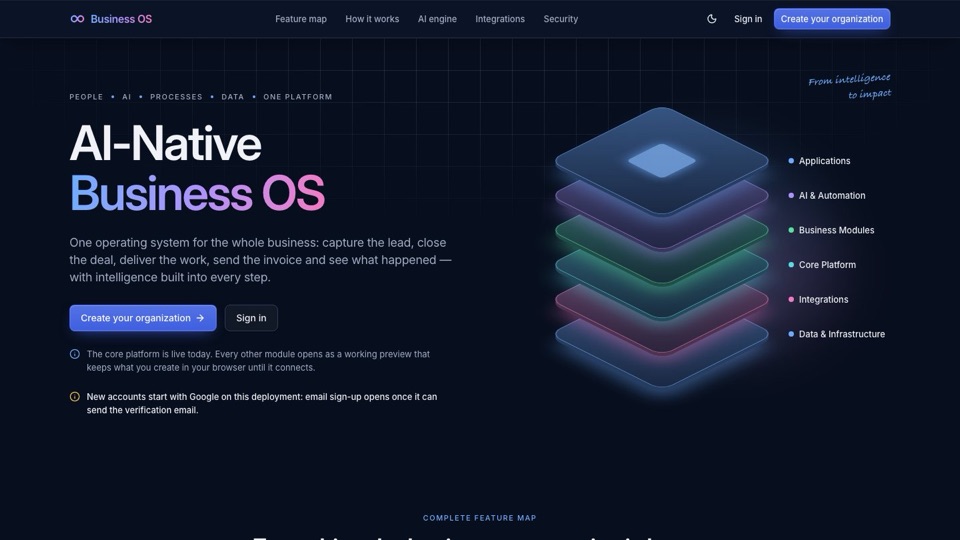
BusinessOS is an AI-native operating system designed to be the "source of truth" for your business. Instead of bolting an AI onto a bunch of different apps, we build the AI into the very core of the system. This prevents the security holes and duplicate data that happen when different apps don't talk to each other.
Our security model includes:
- Data Isolation: We use PostgreSQL row-level security. This ensures that your data is strictly separated from every other business using the platform.
- Secure Access: We use modern sign-in methods like passkeys and two-factor authentication (2FA) to ensure only you can access your business.
- Transparent Audit Logs: Every action taken by a human or an AI agent is recorded in an append-only, searchable, and exportable audit log. You will always know who did what and when.
To learn more about how this foundation works, visit the BusinessOS page.
Reliable and Localized Technology
We understand that Indian business happens on specific platforms. That is why our technology is built specifically for the Indian ecosystem, focusing on integrations that actually matter, such as WhatsApp, GST, and UPI.
We also solve the problem of reliability. If one AI provider (like OpenAI or Google) has a service outage, our model routing technology automatically switches to another provider. This ensures your business operations do not stop just because a single service is down.
Our technical stack is built for speed and modern standards:
| Component | Technology Used |
|---|---|
| Web Application | Next.js |
| API Layer | NestJS |
| Database | PostgreSQL 18 with pgvector |
| Queues & Caching | Valkey |
| Authentication | Better Auth (Passkeys & MFA) |
Get Started with AskShiva
AskShiva is currently in a closed early release. We are working closely with a small group of business owners to ensure the tool solves real problems before we open it to everyone.
This phase is ideal for business owners who want to automate their sales, streamline their operations, or digitize their document workflows. If you are a small business owner in India looking to lead the way in the AI revolution, we want to hear from you.
You can visit AskShiva to see our current progress and find out how to join our early access group. We are building the future of Indian business AI, one task at a time.
Questions people ask
Can the chatbot handle Indian business documents?
Yes, it is designed to produce first-class outputs like GST invoices with correct tax lines.
Does it work with WhatsApp?
Yes, it can prepare and translate messages to be sent to customers on WhatsApp in their preferred language.
Is my business data secure?
Yes, it uses database-level isolation and an append-only audit log to ensure all actions are tracked and secure.
Can I use it with my voice?
Yes, you can speak to the assistant in the browser and it will reply with spoken audio.
How is it different from a standard chatbot?
Unlike standard chatbots, it uses agentic architecture to actually complete tasks like creating files or sending messages rather than just providing text answers.