
What is the synergy between UPI and AI agents?
The synergy between UPI and AI agents lies in bridging the gap between administrative tasks and actual cash flow. While UPI provides the infrastructure for instant digital payments in India, AI agents provide the intelligence to automate the steps leading up to and following a transaction.
In the current Indian business landscape, a transaction is rarely just a single event. It is a sequence: creating a GST-compliant invoice, communicating the total to a client via WhatsApp, and then managing the follow-up. AI agents act as first-class users that can execute these multi-step tasks, moving you from "doing the work" (like drafting a bill) to "getting it done" (preparing the communication needed to trigger a payment).
- Contextual Awareness: Agents can handle the specific context of a transaction, such as remembering a customer's specific details and their previous payment status.
- Multi-step Execution: Instead of just answering questions, agents can draft a GST invoice and prepare it for the next step in your workflow.
- Seamless Transitions: The combination allows for a smooth transition from generating a document to sending the necessary messages to ensure that document is seen and acted upon.
From Invoice to Payment: A Real-World Workflow
For a small business owner, the goal isn't to have a chatbot that talks about invoices; the goal is to have the invoice sent and the money moving. This is the gap that AskShiva is designed to bridge. It moves beyond simple chat to handle the actual "work" of an Indian SME.
Consider a typical scenario for a supplier in a busy market. Instead of opening multiple apps to manage a sale, the workflow looks like this:
- Voice-to-Document: You can give a voice command like "Make a GST bill for Sharma Traders for ₹18,400." The agent calculates the tax lines and produces a formal document.
- Localized Communication: Once the document is ready, the agent can translate a covering message into a local language like Marathi or Hindi. This ensures your customer understands the request in the language they use every day.
- WhatsApp Integration: The agent prepares the invoice and the message to be sent via WhatsApp, which is the primary communication tool for Indian business.
- Intelligent Follow-up: Because the agent maintains memory across conversations, you can say, "Remind me if they have not paid by Friday." The agent remembers the specific invoice and the customer, providing context for the follow-up.
This workflow reduces the friction between a sale being made and a payment being initiated via UPI.
Why Agentic Architecture Matters for Payments
To automate business processes reliably, you need more than a simple chatbot that predicts the next word in a sentence. You need an "agentic architecture." This is a fundamental shift in how software interacts with your business data and tools.
Unlike simple chatbots, AI agents follow a specific, logical loop: plan, act with a tool, check the result, and remember. This loop is what allows an agent to move from a simple question to a complex task, such as preparing a multi-line GST invoice.
When we talk about agents in a professional business context, two things become non-negotiable: permissions and auditability.
- Secure Permission Engine: Agents must operate within a secure permission engine. They should only be able to access the specific data and tools they are authorized to use. An agent should not have the same unrestricted access as a human administrator.
- Append-only Audit Logs: Every single action taken by an agent—whether it is drafting a document or preparing a message—must be recorded in an append-only audit log. This creates a permanent, unchangeable history of all financial and administrative interactions.
This architecture ensures that as you move toward more advanced automation, you maintain total control over what the AI can and cannot do.
The Foundation: Secure Data for Financial Agents
Reliable payment automation is impossible if your data is scattered across spreadsheets, WhatsApp chats, and various email threads. For an AI agent to work effectively, it needs a "source of truth."
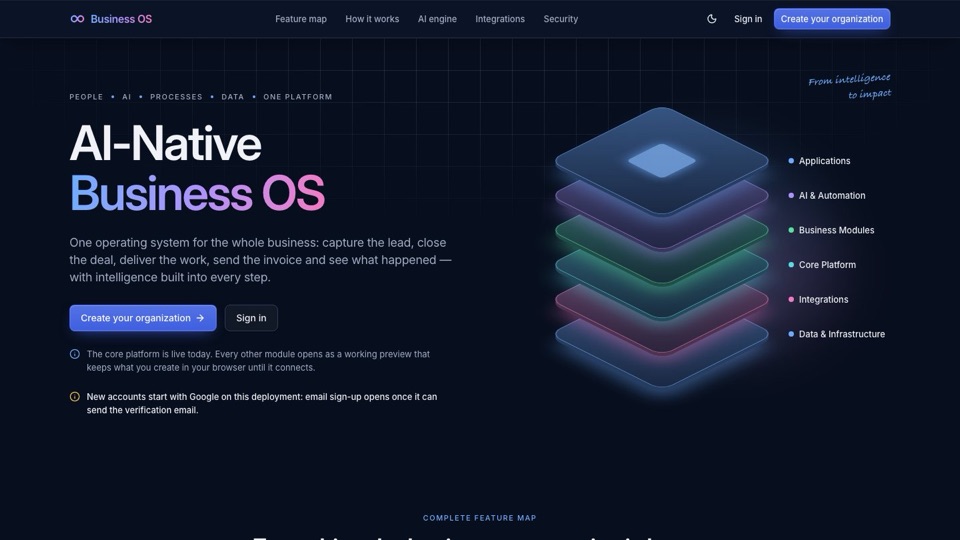
This is why the BusinessOS foundation is built as a multi-tenant, AI-native operating system. Most all-in-one business tools grow by "bolting" products together, which creates seams—security holes and duplicate data. BusinessOS takes the opposite approach: it builds a master architecture first, then builds modules on top of it.
The foundation provides the essential infrastructure that agents need to operate safely:
| Feature | Why it is critical for Agents |
|---|---|
| Identity & Permissions | Ensures the agent acts only within its authorized scope, just like a human employee. |
| Database-level Isolation | Uses PostgreSQL row-level security to ensure data from one business is never visible to another. |
| Centralized Audit Log | Provides a searchable, exportable record of every action taken by an agent for compliance. |
| Unified File Store | Allows agents to find, read, and prepare documents like GST invoices without searching multiple apps. |
By providing this foundation, BusinessOS ensures that an agent following up on an overdue invoice is governed by the same strict rules as a human employee. This is the key to moving from "experimental AI" to "reliable business automation."
Built for the Indian Business Ecosystem
Many AI tools are built for Western markets where business happens via email and specialized accounting software. But Indian business operates differently. It runs on the intersection of WhatsApp, GST, and UPI, often conducted in a mix of English and local languages.
An assistant designed for a different market treats these local realities as "edge cases." An AI agent designed for India treats them as primary features. This includes:
- GST-First Outputs: Generating documents like GST invoices is a core capability, not an afterthought.
- Language Fluidity: The ability to communicate in Hindi, Marathi, and other Indian languages is built into the workflow, allowing for smoother interactions with customers.
- WhatsApp-Centric Workflows: Recognizing that WhatsApp is where the conversation—and the business—actually happens.
By respecting the specific document formats and communication habits of Indian SMEs, these agents become practical tools rather than just novelties.
Security and Auditability in Automated Payments
As businesses begin to use AI to handle administrative and financial tasks, security becomes the top priority. You cannot automate your business if you cannot trust the agent's actions.
The architecture used by BusinessOS and AskShiva is designed to meet the high security standards required for financial data. This is achieved through several layers of protection:
Furthermore, security is not just about keeping people out; it is about knowing exactly what is happening inside. This is why every agentic action is captured in a searchable, exportable audit log. If a question arises about why a certain invoice was prepared or a message was sent, the business owner can trace the exact sequence of events.
To protect the environment where these agents operate, the system supports secure sign-in methods, including passkeys and two-factor authentication (2FA). This ensures that the human controllers of the AI agents are verified and secure.
As the roadmap progresses, we expect to see even more integrated features, including the ability for agents to work within the CRM and HRMS modules to manage the entire lifecycle of a business relationship.
Frequently Asked Questions
- Can AI agents actually send invoices via WhatsApp?
- Yes, agents can draft a document, translate the accompanying message into a local language, and prepare it for sending via WhatsApp.
- How do AI agents handle payment reminders?
- Because agents maintain memory across conversations, they can remember a specific invoice and follow up on it if a payment is not detected by a certain date.
- Is it secure to let an AI agent handle my business data?
- When built on an AI-native operating system like BusinessOS, agents operate under strict permissions and every action is recorded in an append-only audit log.
- Do I need to teach the AI my customer details every time?
- No, the agentic architecture uses memory to keep context across conversations, so you don't have to re-explain customer details for every new task.
- Can these agents work in Indian languages?
- Yes, the technology is designed to translate and communicate in languages like Hindi and Marathi to suit the Indian market.
Questions people ask
Can AI agents actually send invoices via WhatsApp?
Yes, agents can draft a document, translate the accompanying message into a local language, and prepare it for sending via WhatsApp.
How do AI agents handle payment reminders?
Because agents maintain memory across conversations, they can remember a specific invoice and follow up on it if a payment is not detected by a certain date.
Is it secure to let an AI agent handle my business data?
When built on an AI-native operating system like BusinessOS, agents operate under strict permissions and every action is recorded in an append-only audit log.
Do I need to teach the AI my customer details every time?
No, the agentic architecture uses memory to keep context across conversations, so you don't have to re-explain customer details for every new task.
Can these agents work in Indian languages?
Yes, the technology is designed to translate and communicate in languages like Hindi and Marathi to suit the Indian market.