
What are Analog AI Chips?
Analog AI chips are a specialized class of hardware designed to process information using continuous physical signals rather than the discrete 0s and 1s used by traditional digital processors. By leveraging the physical properties of hardware to perform math, they aim to solve the massive energy and speed bottlenecks found in modern digital AI architectures.
In a standard digital system, every calculation is a series of high and low voltages representing bits. To perform a simple multiplication, the chip must move data through a complex series of logic gates, consuming significant time and electricity at every step.
Analog AI chips attempt to change this fundamental approach. Instead of moving data to a logic gate, they aim to perform the math where the data lives, often using the physical behavior of electricity or light to represent values. This is a departure from the standard ai-hardware/ paradigm used by the CPUs and GPUs that power today's most popular models.
- Continuous Signals: They use varying levels of voltage or current to represent a range of numbers, rather than just "on" or "off."
- Physical Computation: They aim to perform complex mathematical operations, like matrix multiplication, using the physical properties of the hardware itself.
- Efficiency Focus: This approach targets the core inefficiencies found in traditional digital architectures, specifically the energy wasted during data movement.
The Digital Bottleneck: Memory and Bandwidth
For most modern AI workloads, the limitation isn't actually how fast the chip can "think" (compute); it is how fast the chip can "remember" (memory bandwidth). This phenomenon is often referred to as the "memory wall."
In current digital AI systems, the processor is often much faster than the path connecting it to the memory. As a result, the chip spends a significant amount of time sitting idle, waiting for data to move from the memory modules to the processing cores. This is particularly true during the "decoding" phase of generating text in a Large Language Model (LLM).
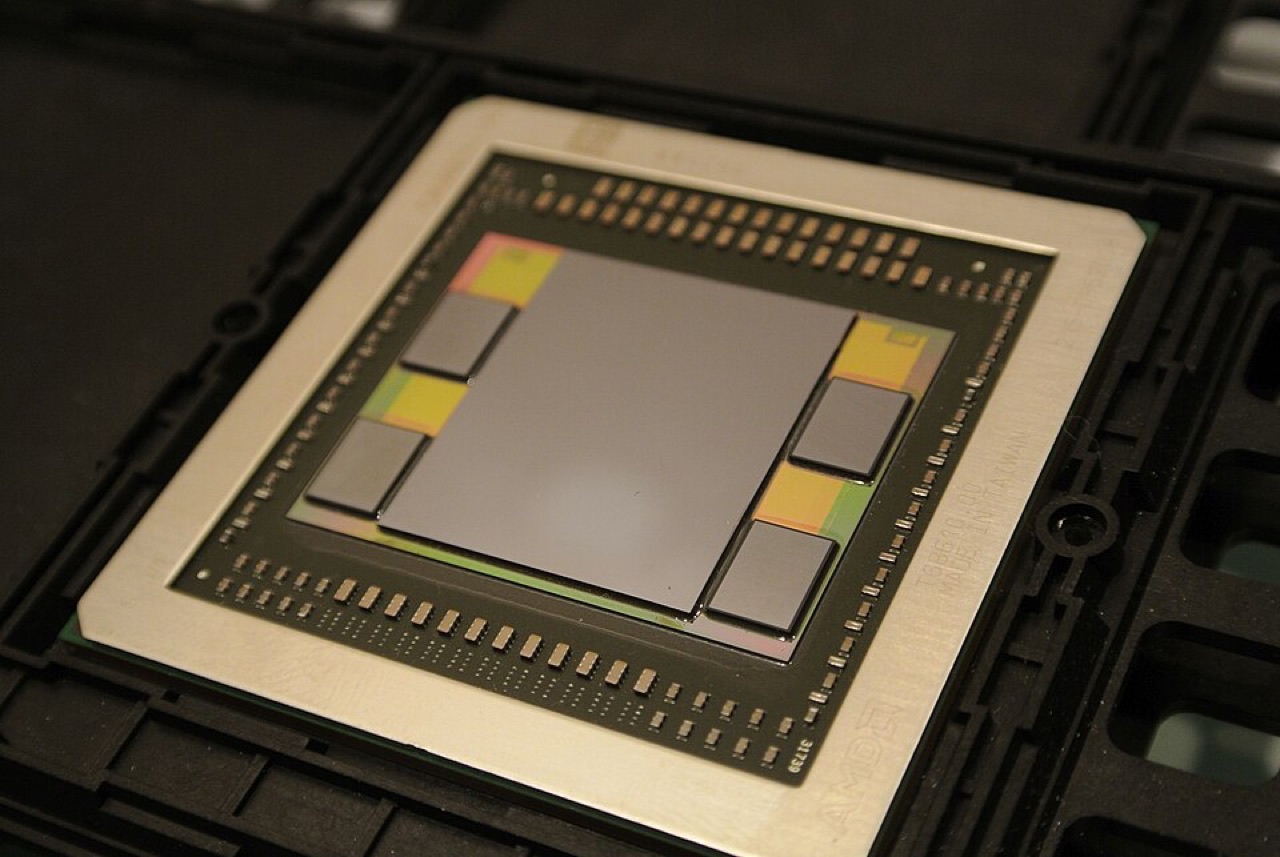
When you are running a model, the chip must read every single active weight from memory for every single token it generates. If the connection between the memory and the processor is narrow or slow, the generation speed drops, regardless of how powerful the processor is. This is why hbm-memory-for-ai/ is so critical for high-end datacenter GPUs; it provides the massive "highway" needed to feed the hungry processor.
Why Analog? Efficiency and Energy
The primary driver behind the interest in analog computing is the massive energy cost of data movement. In a digital chip, moving data across a bus or through multiple logic gates requires a constant flow of electricity to maintain the state of those bits. As models grow to hundreds of billions of parameters, this movement becomes the most expensive part of the entire operation.
Analog computing offers a potential solution through "in-memory" processing. By performing calculations within the memory structure itself, the need to move data back and forth across long, power-hungry buses is drastically reduced. This minimizes the distance data travels, which is the most effective way to lower the energy footprint of AI hardware.
| Feature | Digital Computing (GPUs/CPUs) | Analog Computing (Emerging) |
|---|---|---|
| Data Representation | Discrete (0s and 1s) | Continuous (Physical signals) |
| Primary Energy Cost | Moving data between memory and logic | Maintaining signal precision |
| Computation Style | Sequential/Parallel logic gates | Physical laws (e.g., Kirchhoff's laws) |
For a business owner in a high-cost energy environment—such as a data center operator in a region with expensive electricity—reducing the "joules per token" is the most direct way to improve the bottom line. If analog chips can perform the same math at a fraction of the power, they could fundamentally change the economics of AI deployment.
Solving Matrix Multiplication
At its core, a neural network is essentially a massive collection of matrix multiplications. Every time a model like Llama 3 or GPT-4 processes a prompt, it is multiplying an input vector by billions of weights. This is the "heavy lifting" of AI.
Current digital hardware handles this in different ways:
- GPUs: Use thousands of simple cores to do the same operation on large blocks of numbers in parallel.
- Tensor Cores: Specialized units in modern NVIDIA GPUs that are designed to multiply small matrices in a single step, often using reduced precision (like FP8 or FP4) to speed up the math.
Analog approaches attempt to perform these multiplications nearly instantly through physical laws. For example, in certain analog designs, you can pass a voltage (representing the input) through a resistor (representing the weight), and the resulting current is naturally the product of the two. This allows for a level of throughput that could theoretically exceed what digital systems can achieve per watt of power consumed.
The Current Hardware Landscape
While analog technology is an exciting frontier, the current reality for builders is a hierarchy of digital hardware. If you are building an application today, you are likely working within one of these three tiers:
- Consumer GPUs: These use GDDR memory. They offer the best bandwidth per rupee (or dollar) but have limited VRAM capacity. They are great for testing or small-scale local tasks.
- Workstation GPUs: These often use ECC (Error Correction Code) memory and more VRAM, designed for professionals who need to run large models for hours at a time without errors.
- Datacenter GPUs: These use HBM (High Bandwidth Memory), which is stacked directly on or next to the processor. This provides the massive bandwidth required for high-throughput serving and training.
The goal of emerging hardware, including analog and photonic-computing-ai/, is to match or exceed the performance of these high-end digital systems while solving the power and heat problems that come with them. As models get larger, the demand for more VRAM and higher bandwidth only increases, making the search for more efficient architectures more urgent.
The Future of AI Hardware
The trajectory of AI hardware is moving toward specialization. We are seeing a split in how hardware is used: some chips are optimized for inference (running the model), while others are built for training (teaching the model). For most businesses, the real opportunity lies in efficient inference.
Whether the industry moves toward better digital improvements—like the massive bandwidth of HBM3e—or toward entirely new analog architectures, the ultimate goal for developers remains the same: maximizing tokens per second while minimizing cost and power.
Builders must choose their hardware based on a specific balance of three factors:
- Memory Capacity: Can the hardware hold the entire model weights plus the KV cache (the "memory" of the current conversation)?
- Memory Bandwidth: How fast can the chip read those weights to generate the next word?
- Precision Requirements: Does the model need high precision (FP16), or can it be quantized down to 4-bit or 8-bit to save space and speed up math?
As we move into the era of agentic workflows and massive context windows, the hardware that wins will be the one that best overcomes the memory wall.
Questions people ask
Why do we need new types of AI chips?
Current digital chips face a 'memory wall' where moving data between memory and the processor consumes more time and energy than the actual computation.
How do analog chips differ from GPUs?
While GPUs use digital logic and thousands of small cores to perform math, analog chips use continuous physical signals to process information, often performing calculations directly within the memory.
Will analog chips replace GPUs?
They are being explored to solve specific efficiency and energy problems, especially as the power demands of large models continue to grow.
Does analog computing affect model precision?
Analog computing deals with continuous signals, which presents different challenges for precision compared to the discrete 4-bit or 8-bit quantization used in digital chips.
What is the main benefit of analog AI hardware?
The primary benefits are reduced energy consumption and higher efficiency by minimizing the movement of data between the processor and memory.