
What is Neuromorphic Computing?
Neuromorphic computing is a specialized hardware approach designed to mimic the neuro-biological structures of the human brain. By integrating processing and memory, it aims to solve the massive energy and data-transfer bottlenecks found in traditional computer architectures.
In a standard computer, the "brain" (the CPU) and the "memory" (the RAM) are separate components connected by a bus. Every time the computer needs to perform a calculation, it must move data back and forth across this connection. This constant movement is slow and consumes a vast amount of electricity.
Neuromorphic architectures change this fundamental design. Instead of having a central processor that constantly fetches data from a distant warehouse, these systems aim to integrate processing and memory into a single, cohesive unit. This mimics how biological neurons work, where the signal processing and the storage of information happen in the same physical space.
- Biological Mimicry: Hardware designed to act like human neurons and synapses.
- Integrated Architecture: Processing and memory are co-located to prevent data travel delays.
- Efficiency: By reducing the distance data travels, these chips can operate with much lower power requirements.
Solving the AI Memory Wall
To understand why neuromorphic computing is gaining interest, you must first understand the "memory wall." In current GPU and CPU setups, the chip spends much of its time waiting on memory bandwidth rather than performing actual math. Even the most powerful hardware can be held hostage by the speed at which data can be moved.
For developers building Large Language Models (LLMs), this is a critical bottleneck. When you are running inference—the process of an AI generating a response—the speed is often limited by how fast the model's weights can be read from the VRAM, not just the raw compute power of the chip. If the weights cannot be fed into the processor fast enough, the processor sits idle, wasting time and energy.
This bottleneck is the primary driver of energy consumption in modern AI. Moving data across a motherboard or even across a high-speed bus requires significant electrical work. If we can solve the memory wall, we solve the scaling problem for AI.
Neuromorphic vs. Traditional AI Chips
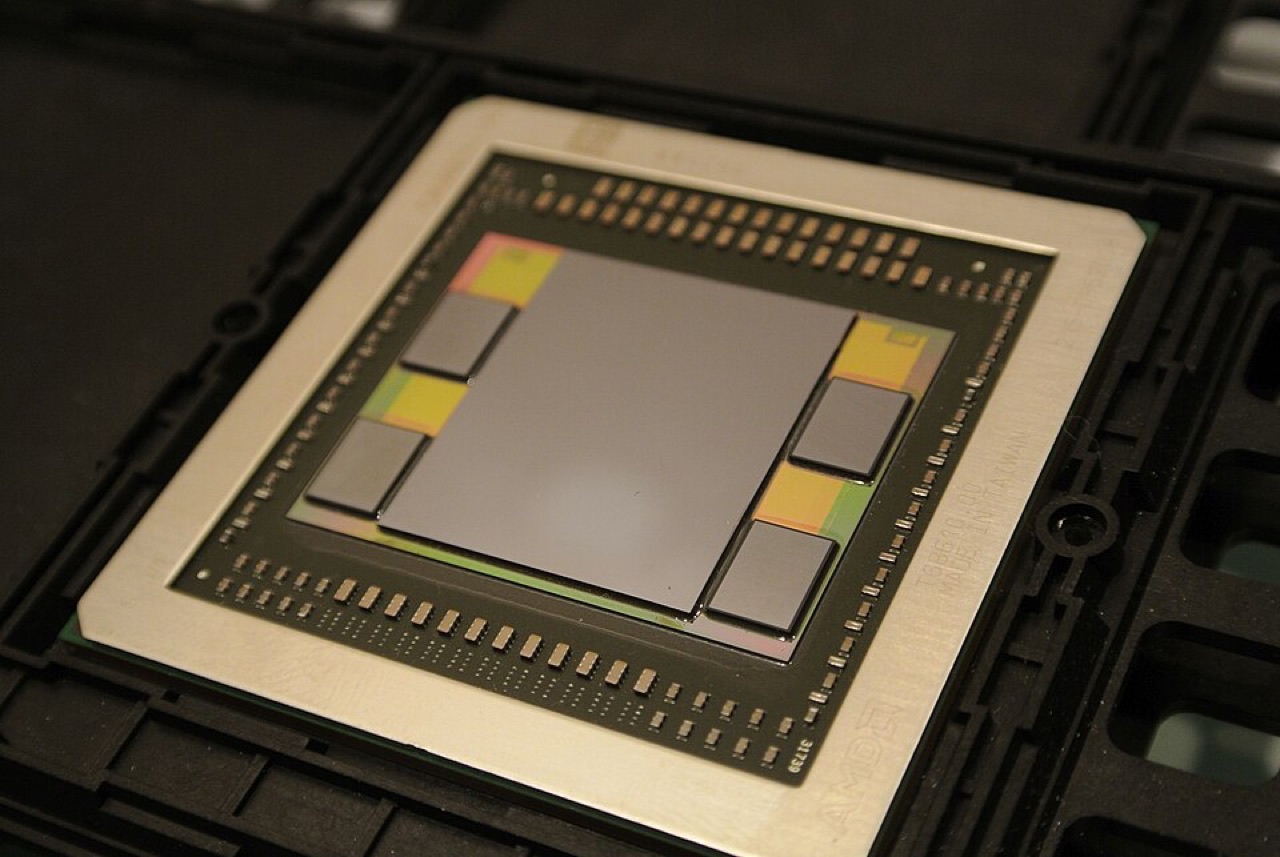
Current AI workloads rely heavily on GPUs. A GPU uses thousands of simple, specialized cores to perform massive parallel matrix multiplications. This is perfect for the heavy math required by neural networks, but it is not a perfect match for how the brain works. GPUs rely on high-bandwidth memory (HBM) or GDDR to feed these cores, but they still face significant power and data-transfer overhead.
Neuromorphic chips take a different approach called "event-driven processing." In a traditional chip, the system is often "always on," processing data even if that data hasn't changed. In a neuromorphic system, computation only occurs when "spikes" of data are present, much like how a biological neuron only fires when it receives a specific electrical signal.
| Feature | Traditional AI Chips (GPUs) | Neuromorphic Chips |
|---|---|---|
| Core Logic | Massive parallel matrix multiplication | Event-driven "spiking" neural networks |
| Data Handling | Continuous data flow to cores | Computation triggered by data "events" |
| Architecture | Separated compute and memory (von Neumann) | Integrated compute and memory |
| Primary Strength | High-throughput training and inference | Extreme energy efficiency |
Energy Efficiency and Scaling
For business owners, the cost of AI is often hidden in the power bill and the cooling requirements. Current high-end AI workstations can draw close to a kilowatt under load. This creates massive challenges for data centers and even for small offices in regions where electricity is expensive or power stability is an issue. For example, a business in India running a dedicated AI server would need to invest in significant UPS or inverter infrastructure to handle these loads.
Neuromorphic computing seeks to drastically lower the energy cost per operation. By minimizing the distance between where data is stored and where it is processed, we can move away from power-hungry, heat-generating setups. This is critical for scaling AI from massive, temperature-controlled data centers to "edge" devices—the small, battery-powered chips in your phone, your car, or industrial sensors.
As we move toward more autonomous systems, the ability to run complex AI on a small battery without overheating is the "holy grail" of hardware design.
The Future of AI Hardware
The industry is not moving toward a single "winner" in the hardware race. Instead, we are seeing a move toward specialized hardware for different tasks. We expect a landscape where GPUs remain the kings of high-throughput training, while neuromorphic chips take over the world of efficient, real-time edge inference.
As AI models grow, the focus of hardware design is shifting. It is no longer just about raw TFLOPS (teraflops), which measures how many calculations a chip can do per second. Instead, the focus is shifting toward memory capacity and bandwidth efficiency. If a chip cannot move the data, its raw speed is irrelevant.
For builders designing agentic AI systems—where AI agents perform multiple steps of reasoning and action—understanding the interplay between compute, memory, and architecture is essential. The winners in the next decade of AI will be those who understand which hardware is best for which specific part of the AI lifecycle.
To understand the current state of the hardware market, explore our overview of AI hardware tiers or learn more about next-generation AI chips.
Frequently Asked Questions
- How does neuromorphic computing differ from a GPU?
- While a GPU uses massive parallelism to perform matrix multiplications on large blocks of numbers, neuromorphic computing mimics biological neurons to process information more efficiently through event-driven spikes.
- What is the 'memory wall' in AI hardware?
- The memory wall is the bottleneck where the speed of data transfer between the processor and memory cannot keep up with the processor's speed, causing the chip to sit idle.
- Why is energy consumption a concern for AI hardware?
- High-end AI hardware can draw significant power; for example, a workstation with a high-end GPU can approach a kilowatt of draw, requiring specialized power and cooling infrastructure.
- Will neuromorphic chips replace GPUs?
- Not necessarily. GPUs are currently optimized for the heavy matrix math required for training and high-throughput inference, while neuromorphic chips are targeted at highly efficient, brain-like processing for edge devices.
- How does memory bandwidth affect AI performance?
- Memory bandwidth determines how many tokens per second a model can generate; once a model fits in memory, the speed of generation is largely a function of how fast weights can be read.
Questions people ask
How does neuromorphic computing differ from a GPU?
While a GPU uses massive parallelism to perform matrix multiplications on large blocks of numbers, neuromorphic computing mimics biological neurons to process information more efficiently through event-driven spikes.
What is the 'memory wall' in AI hardware?
The memory wall is the bottleneck where the speed of data transfer between the processor and memory cannot keep up with the processor's speed, causing the chip to sit idle.
Why is energy consumption a concern for AI hardware?
High-end AI hardware, such as a workstation with an RTX PRO 6000, can draw up to 600W, and entire systems can approach a kilowatt, requiring significant power and cooling infrastructure.
Will neuromorphic chips replace GPUs?
Not necessarily; GPUs are currently optimized for the heavy matrix math required for training and high-throughput inference, while neuromorphic chips are targeted at highly efficient, brain-like processing.
How does memory bandwidth affect AI performance?
Memory bandwidth determines how many tokens per second a model can generate; once a model fits in memory, the speed of generation is largely a function of how fast weights can be read.