
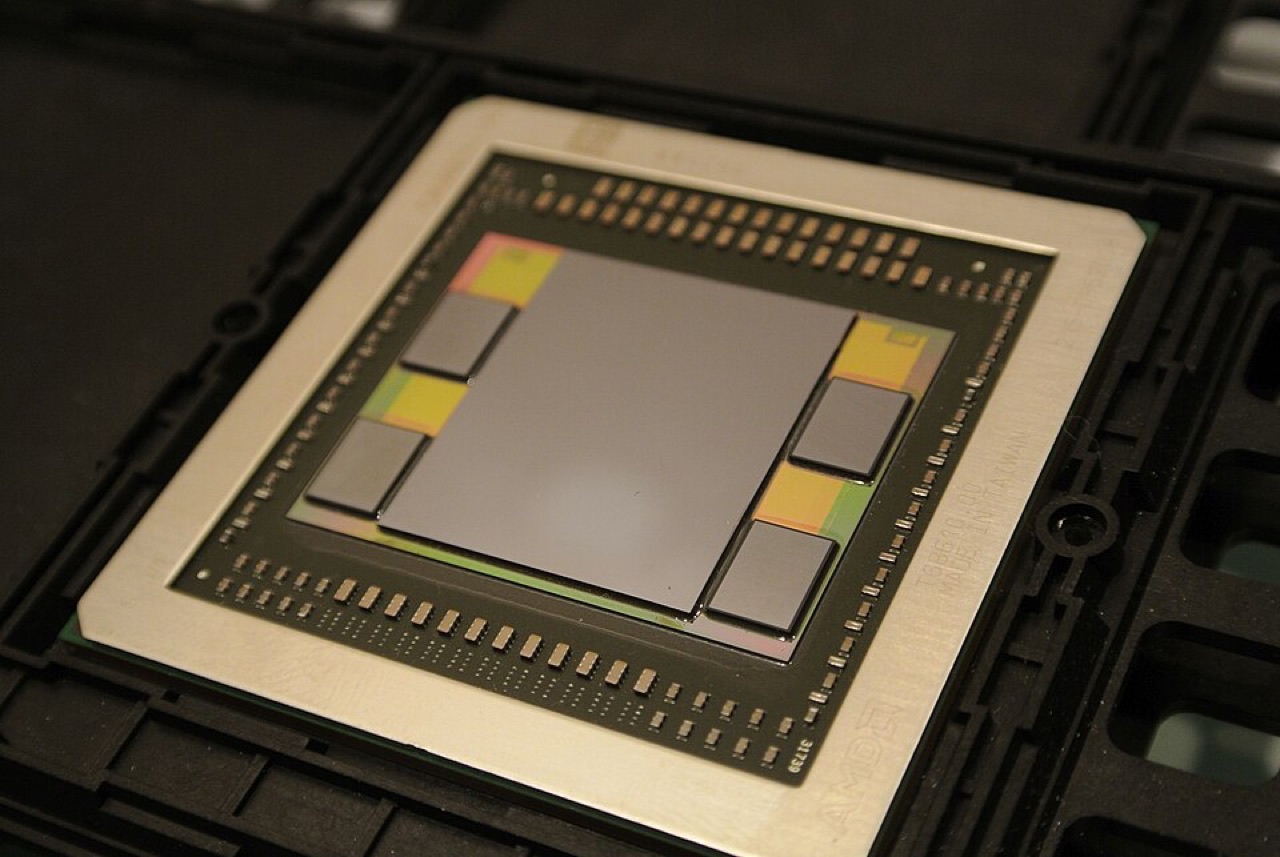
What are Neuromorphic Chips?
Neuromorphic computing is a specialized approach to AI hardware designed to mimic the neural structure of the human brain. Unlike traditional architectures, these chips focus on how neurons and synapses process information to achieve unprecedented efficiency.
While standard computing relies on a rigid separation between where data is stored and where it is processed, neuromorphic computing seeks to emulate biological efficiency. This represents a fundamental shift from general-purpose computing toward specialized, brain-like hardware.
In a traditional system, data must travel back and forth between the processor and the memory. In a neuromorphic system, the architecture is designed so that processing and memory are much more tightly integrated, much like how biological neurons handle both signals and storage simultaneously.
- Neural Structure: The hardware architecture is inspired by the way biological neurons and synapses communicate.
- Event-Driven Processing: Instead of constant clock cycles, these chips often respond to "spikes" or specific inputs, much like a human brain only reacts to relevant stimuli.
- Specialized Efficiency: They move away from the general-purpose logic of a CPU to focus specifically on the patterns found in neural networks.
Neuromorphic vs. Traditional AI Hardware
To understand where neuromorphic chips fit, we must first look at the hardware currently dominating the AI landscape. Most businesses today choose between CPUs and GPUs depending on the complexity and scale of their tasks.
The Current Standard: CPUs and GPUs
CPUs (Central Processing Units) are the "brains" of a standard computer. They are designed for branching and varied logic, using a few powerful cores to handle a wide variety of complex, sequential tasks. They are excellent at running an operating system or a web server, but they struggle with the massive, repetitive math required for modern AI.
GPUs (Graphics Processing Units) were designed to solve a different problem: graphics. Because rendering images requires performing the same math on millions of pixels simultaneously, GPUs use thousands of simpler cores to perform parallel matrix multiplications. This "parallelism" is exactly the shape of current AI work, which is why GPUs are the industry standard for training and running large models.
The Neuromorphic Alternative
Neuromorphic chips take a different path. Instead of focusing on massive parallel math for every operation, they attempt to emulate the biological efficiency of the human brain. This means they don't just run the math; they attempt to change how the hardware interacts with data to reduce the energy wasted in moving that data around.
| Feature | CPU | GPU | Neuromorphic |
|---|---|---|---|
| Core Design | Few, powerful cores for complex logic. | Thousands of simple cores for parallel math. | Mimics neural/synaptic structures. |
| Primary Strength | General-purpose tasks and branching. | High-throughput matrix multiplication. | Extreme energy efficiency and real-time response. |
| Data Movement | High separation of memory and compute. | High-speed bus between chip and VRAM. | Integrated memory and compute (emulating synapses). |
The Efficiency Advantage
For business owners running AI at scale, energy consumption is a massive, often hidden, cost. Current AI hardware is incredibly power-hungry. For example, a high-end AI workstation can draw close to a kilowatt of power under a heavy load.
As companies move from running a single model to managing massive datacenter GPU clusters, these power requirements scale linearly. This creates a "heat problem" where significant infrastructure is dedicated just to cooling the hardware. The electricity required to run and cool these clusters is a major part of the total cost of ownership.
Neuromorphic designs aim to solve this high energy consumption. By processing information more like biological neurons—only consuming significant power when there is an "event" or a change in input—they seek to reduce the massive power requirements of modern AI. For an edge device, such as a smart camera in a factory or a sensor in a remote field, this efficiency is the difference between a device that lasts years on a battery and one that dies in hours.
The Role of Memory in AI Hardware
In modern AI computing, the bottleneck is rarely the speed of the processor itself; it is the speed at which data can get to that processor. This is often referred to as the "memory wall."
In standard hardware, the chip spends a significant amount of its time simply waiting for data to arrive from the memory. This is particularly true during inference (the process of a model generating an answer). For many AI tasks, the performance is limited by memory bandwidth—the speed at which data can be moved from memory to the processor.
This is why high-performance hardware like HBM (High Bandwidth Memory) is so critical. In datacenter GPUs, HBM is stacked directly on the chip to provide massive bandwidth. Without this speed, even the most powerful processor will sit idle, waiting for the next set of weights to arrive.
Neuromorphic architectures aim to bypass this bottleneck entirely. By integrating memory and compute more closely—effectively making the "memory" part of the "processor"—they avoid the constant, energy-intensive shuttling of data across a bus. This could fundamentally change how we think about AI inference chips in the future.
Where Neuromorphic Computing Fits
It is important to understand that neuromorphic chips are not likely to replace GPUs. Instead, they are likely to complement them, occupying different niches in the AI ecosystem. The hardware landscape is diversifying, and different tasks require different tools.
The GPU Domain: Training and Throughput
GPUs remain the kings of large-scale training. When you are training a frontier model on trillions of tokens, you need the massive parallel throughput that only a cluster of datacenter GPUs can provide. They are also ideal for high-throughput serving, where you need to handle many users simultaneously.
The Neuromorphic Domain: The Edge
Neuromorphic chips target specialized, low-power tasks, particularly at the "edge." The edge refers to devices that operate in the real world, often without a constant connection to a massive datacenter. Examples include:
- Autonomous Sensors: Sensors that only "wake up" when they detect a specific pattern, saving massive amounts of battery.
- On-Device AI: Smart features in smartphones or wearables that need to run AI locally without draining the battery or sending private data to the cloud.
- Robotics: Real-time sensory processing where low latency and high efficiency are required for movement and interaction.
In short, if you are building a massive language model, you want GPUs. If you are building a smart sensor that needs to run on a coin-cell battery for a year, you want neuromorphic technology.
The Evolving Hardware Landscape
The hardware landscape is rapidly diversifying. We are moving away from a world where "one size fits all" and toward a world of specialized accelerators. We already see this in laptops and phones, which increasingly include NPUs (Neural Processing Units) designed for small, efficient AI tasks like background blur in video calls or transcription.
As AI models grow in complexity, the industry is constantly balancing three competing needs: memory capacity, memory bandwidth, and power efficiency.
Looking forward, the industry is exploring several frontiers to solve these challenges. Some are looking at photonic computing to use light instead of electricity, while others are refining how we use next-generation AI chips to manage the massive memory requirements of larger models. Neuromorphic computing remains a key frontier in this evolution, offering a path toward the ultimate goal: AI hardware that is as efficient and responsive as the human brain itself.
Questions people ask
How do neuromorphic chips differ from GPUs?
GPUs use thousands of cores to perform parallel math for matrix multiplication, whereas neuromorphic chips mimic the brain's neural structure to process information more efficiently.
Are neuromorphic chips used for training LLMs?
Currently, most LLM training is done on massive clusters of datacenter GPUs; neuromorphic chips are more focused on efficient, brain-like processing.
Why is energy consumption a concern in AI hardware?
High-end AI hardware can draw significant power; for example, an AI workstation can draw nearly a kilowatt under load.
What is the main bottleneck in current AI hardware?
For many AI tasks, the bottleneck is memory bandwidth—the speed at which data can be moved from memory to the processor.
Will neuromorphic chips replace GPUs?
They are likely to serve different niches, such as low-power edge devices, while GPUs continue to dominate high-performance training and inference.