
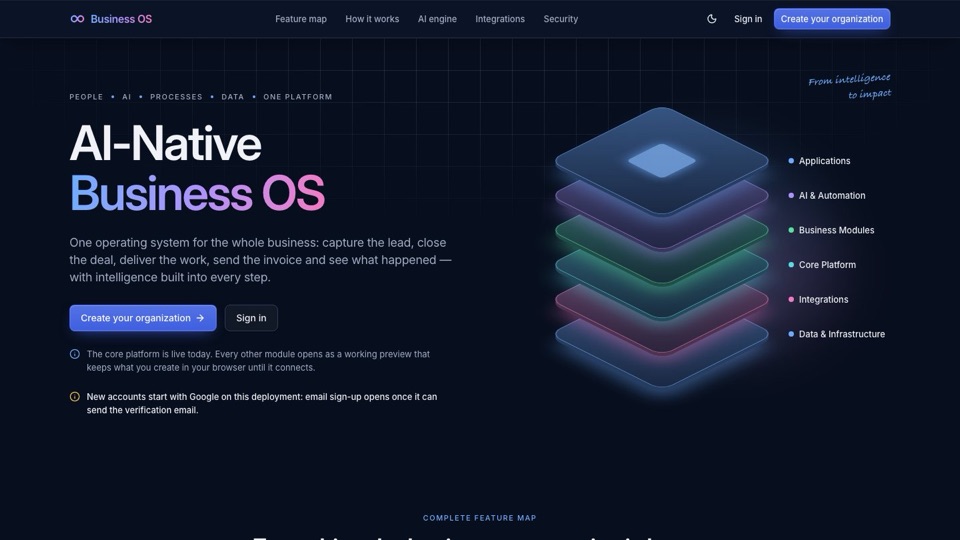
Multi-tenant SaaS architecture is a software design where a single instance of an application serves multiple customers, known as tenants, while keeping their data strictly isolated. It provides a shared foundation for identity and services to ensure scalability and security.
What is Multi-Tenant SaaS Architecture?
In a traditional software model, you might give every customer their own separate server and database. While secure, this is expensive and a nightmare to update. Multi-tenancy changes this by allowing many customers to share the same underlying infrastructure and software code.
A single software instance serves multiple customers (tenants) while keeping their data strictly isolated. Think of an apartment building: all residents share the same foundation, plumbing, and electrical wiring, but each family has their own locked door and private space inside. They don't see their neighbors' mail or walk into their living rooms.
Modern architecture uses a shared foundation for identity, permissions, and files, but enforces separation at the database level. This means you don't have to rebuild the "login" system every time you get a new customer. You build it once, and every new tenant uses that same high-quality engine.
Effective multi-tenancy allows for efficient updates and resource sharing without compromising security. When you want to add a new feature, you update it once, and every customer gets the update instantly. This is the core principle behind a business operating system designed for growth.
Ensuring Security with Data Isolation
The biggest fear for any business owner using software is "data leakage"—the idea that Customer A could accidentally see Customer B's private information. In a multi-tenant system, preventing this is the highest priority.
The most secure approach uses Row-Level Security (RLS) within the database to enforce tenant isolation. Instead of relying on the application code to remember to "filter by customer ID" every single time a developer writes a query, the database itself acts as a gatekeeper. If a user tries to request data that doesn't belong to their organization, the database simply says "no."
Each tenant's data is accessed via a signed tenant context to prevent cross-tenant data leakage. When a user logs in, the system creates a secure "context" that travels with every request. This context tells the database exactly which organization the user belongs to, ensuring they only ever see their own rows of data.
Automated tests should verify isolation for every table in the database to ensure compliance. You cannot rely on manual checks alone. Robust systems use automated scripts that constantly attempt to "break" the isolation by trying to access data across tenant boundaries. If a test succeeds in seeing another tenant's data, the build fails immediately.
Building for AI-Native Workflows
We are moving into an era where software isn't just a tool for humans, but a workspace for AI. To do this correctly, the architecture must be "AI-native." This is a core focus for AI-native CRM designs and modern operating systems.
In an AI-native architecture, AI agents are treated as first-class users with their own identities. An AI agent isn't just a "plugin" or a "chat box"; it is a digital entity with its own login and permissions. This allows the AI to act on your behalf within the system.
Agents must operate within the same permission and approval frameworks as human employees. The AI cannot bypass the rules you have set for your staff.
Every action taken by an AI agent must be recorded in the system's append-only audit log for accountability. If an agent sends an email or updates a lead, there must be a permanent record. This is vital for building trust in AI-operating systems for business, where you need to know exactly why an agent made a specific decision.
The Modern Multi-Tenant Tech Stack
Building a secure, scalable multi-tenant system requires a specific set of modern technologies. Developers must choose tools that support strict isolation and high-speed data processing.
Core Components
- Backend: NestJS API with a typed SDK and a TypeScript monorepo. This ensures that the code used by the server and the code used by the frontend stay in sync, reducing bugs.
- Database: PostgreSQL 18 with
pgvectorfor AI-powered search and vector capabilities. This allows the system to perform traditional data queries and modern "semantic" AI searches in the same place. - Real-time & Queues: Valkey for caching and an outbox pattern for event reliability. The outbox pattern ensures that if the database updates, the resulting notification or background task is guaranteed to happen.
- Authentication: Better Auth supporting passkeys, MFA, and SSO (Google/Microsoft). This provides a modern, secure way for users to sign in without relying solely on easily-stolen passwords.
Bolted-on vs. Unified Architecture
Understanding the difference between these two approaches is critical for business owners deciding which software to invest in. A "bolted-on" system might seem cheaper or more feature-rich at first glance, but it often creates hidden costs and risks.
| Feature | Bolted-on Architecture | Unified Architecture |
|---|---|---|
| User Management | Duplicate users across different modules | Single identity engine for everything |
| Data Integrity | Data "seams" and duplication between apps | Single source of truth in one database |
| Security | Fragmented permission models | Consistent, centralized permission engine |
| AI Readiness | AI can only see small, disconnected pieces | AI has full context across all modules |
Bolted-on tools often have duplicate data and security holes due to fragmented user and permission models. When the "Sales" tool doesn't know what the "Accounting" tool is doing, the business loses the ability to see the full picture.
Unified architectures prevent 'seams' between modules by sharing a single design system and permission engine. This creates a seamless experience where moving from a CRM to an HR tool feels natural and integrated.
A master architecture with written decision records ensures consistency as the platform grows. By documenting why certain architectural choices were made, the engineering team can ensure that new features don't accidentally break the core security or isolation rules that protect the customers.
Frequently Asked Questions
- How is data kept private in a multi-tenant system?
- Data is isolated at the database level, often using PostgreSQL Row-Level Security (RLS) with a signed tenant context to ensure one organization cannot access another's data.
- What is the benefit of a single permission engine?
- A single engine ensures consistent roles and access controls across all modules, preventing security holes and duplicate user management.
- How do AI agents fit into multi-tenant architecture?
- AI agents act as first-class users with their own identities, operating within the same permission and audit log structures as human users.
- What is an append-only audit log?
- It is a permanent, unchangeable record of who performed what action and when, which is essential for security and compliance in SaaS.
- Why use an outbox pattern in SaaS architecture?
- An outbox ensures that no data is lost between a database change and the background jobs or events that the change triggers.
Questions people ask
How is data kept private in a multi-tenant system?
Data is isolated at the database level, often using PostgreSQL Row-Level Security (RLS) with a signed tenant context to ensure one organization cannot access another's data.
What is the benefit of a single permission engine?
A single engine ensures consistent roles and access controls across all modules, preventing security holes and duplicate user management.
How do AI agents fit into multi-tenant architecture?
AI agents act as first-class users with their own identities, operating within the same permission and audit log structures as human users.
What is an append-only audit log?
It is a permanent, unchangeable record of who performed what action and when, which is essential for security and compliance in SaaS.
Why use an outbox pattern in SaaS architecture?
An outbox ensures that no data is lost between a database change and the background jobs or events that the change triggers.