
What is AI War Gaming for Strategy?
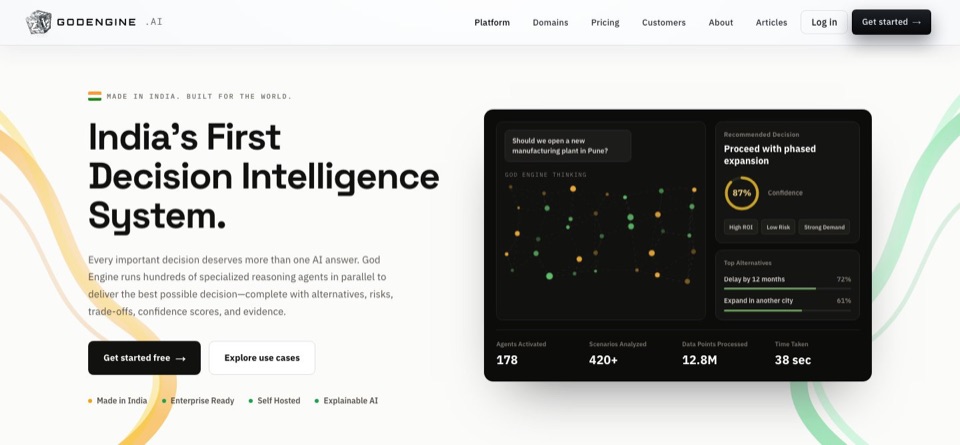
AI war gaming is the process of building a model of the world to simulate how different decisions play out. Instead of providing a single answer, it uses scenarios to show multiple plausible futures and identifies the causal links that drive business outcomes.
In traditional business planning, we often rely on intuition or static spreadsheets. AI war gaming moves beyond simple prediction. It treats every strategic question as a small, dynamic model of the world. It doesn't just tell you what might happen; it shows you the mechanics of why it might happen.
When you pose a strategic question, the engine performs several critical tasks:
- Simulating Outcomes: It builds a model to simulate how different paths play out over time.
- Scenario Probing: It moves beyond a single "best guess" to show multiple plausible futures.
- Identifying Dependencies: It identifies what must be true for a specific scenario to succeed and, equally importantly, what would break it.
- Mapping Causality: It helps operators weigh bets under uncertainty by mapping the direct cause-and-effect links between actions and results.
This approach turns a vague question into a structured map of possibilities, allowing you to see the world through the lens of decision intelligence.
Why Fluency is Not Strategy
Large language models are excellent at producing fluent answers. They can write beautiful, professional-sounding prose in seconds. However, in high-stakes business environments, there is a hidden danger: fluency often looks like certainty.
When you use a standard chatbot for strategy, a single, confident-sounding reply often hides a massive amount of complexity. It collapses dozens of moving parts—market trends, competitor reactions, and internal constraints—into a single paragraph. This lack of structure is a risk when you are committing real capital.
| Feature | Standard Chatbots | AI War Gaming (GodEngine) |
|---|---|---|
| Output Style | Fluent, singular prose | Structured models and scenarios |
| Complexity | Often hides moving parts | Exposes causal links and dependencies |
| Reliability | Relies on "sounding" correct | Relies on verifiable reasoning and graphs |
| Transparency | Black box (text only) | Open model (knowledge graph) |
GodEngine avoids the "black box" problem. True strategy requires seeing the underlying causal links, not just reading a confident paragraph. By using ai reasoning, the engine shows you the model it has built, allowing you to inspect the logic rather than just accepting the conclusion.
How the Engine Probes Scenarios
The engine works through a "resolve pipeline." This is not a single step where you wait for a wall of text; instead, the engine streams its reasoning in real-time so you can watch the simulation unfold. This process is built on an agentic architecture that follows a "plan, act, verify" loop.
The Workflow of a Simulation
- Extraction: The engine extracts entities, facts, and cause-and-effect links from your decision question. For example, if you ask about expanding a retail business, it identifies the "outlet," the "location," and the "delivery service" as key entities.
- Knowledge Graph Construction: It builds a knowledge graph that you can click through. This graph visualizes how different pieces of your business interact.
- Scenario Building: It constructs a set of plausible scenarios. It doesn't just give you one "likely" outcome; it builds several different versions of the future.
- Probing: The engine probes each scenario. It asks: "What has to be true for this to work?" and "What event would break this entire plan?"
This structured approach to strategic reasoning ensures that you aren't just guessing; you are stress-testing your assumptions against a simulated reality.
Auditable Reasoning and Fact-Checking
One of the biggest hurdles in AI-driven strategy is trust. GodEngine is designed for leaders who must explain their decisions to boards, investors, or partners with a defensible audit trail.
Every claim in a GodEngine report is designed to be verifiable. The engine provides:
- Direct Citations: Every claim points back to a specific entity, a link in the knowledge graph, or a specific source.
- A "Numbers Check": The engine includes a specific check that compares figures provided in the answers against computed facts. This is a vital safeguard against the "hallucinations" common in other models.
- Structured Reporting: Instead of a long essay, you receive a report that lays out options, likely outcomes, and risks in a clear, actionable format.
While the "numbers check" is a work in progress and may have known misses, it is designed to show its working. The goal is to provide reasoning you can audit, rather than a result you have to blindly trust.
Who Should Use AI War Gaming?
AI war gaming is built for "operators"—the people responsible for making high-stakes decisions in the real world. If your decision requires you to explain your logic to someone else, this tool is for you.
Common Use Cases
- Founders: Deciding between entering new markets, making key hires, adjusting pricing models, or deciding when to pursue a new funding round.
- Finance and Business Analysts: Moving beyond single-number forecasts to create defensible, scenario-based write-ups for stakeholders.
- Operations Leaders: Weighing organizational changes that impact multiple departments, such as restructuring a supply chain or changing a sales incentive program.
- Researchers: Mapping the specific, underlying causes behind a sudden market trend or a specific economic event.
Whether you are a small business owner in Vasai deciding whether to invest in a second outlet or a tech founder planning a pivot, the engine helps you map the costs of being wrong.
Private Models for Strategic Data
Strategic questions are sensitive. You cannot simply paste your unreleased product roadmap or your quarterly profit margins into a public chatbot without risking your competitive advantage. Privacy is a core requirement for any serious AI decision-making tool.
GodEngine is designed with a flexible architecture to handle sensitive data. While the engine runs on our own servers, we have built the pipeline so that different stages can be routed to self-hosted, open models. This means you can run the most sensitive parts of your strategic reasoning on your own private GPU servers.
Our priority is ensuring that a decision engine you cannot trust with your data is not useful. While full routing to private models is currently being expanded, the ability to maintain control over your strategic environment is a fundamental part of our design.
Get Early Access to GodEngine
GodEngine is currently in an early release phase and is open by invitation. We are focused on building a robust tool rather than overselling a finished product. Currently, the engine is available on the Web and as an early release on Android.
GodEngine is the first of five platforms on this site. We are building a suite of tools designed to move users from simple chat to deep, verifiable reasoning.
| Capability | Current State |
|---|---|
| Streaming decision reports | Built |
| Cause-and-effect knowledge graph | Built |
| Scenario building and probing | Built |
| Web and Android access | Built |
| Deeper simulation with multiple agents | Working (being sped up) |
| Time-series forecasting (TimesFM) | Partly built |
| Routing to self-hosted private models | Partly built |
To get started, you can ask for access through our website. If you have a specific, complex decision you would like to see the engine reason through, you can write to us directly to demonstrate the value of the tool.
Frequently Asked Questions
- How is AI war gaming different from a standard AI chatbot?
- Chatbots provide fluent, singular answers that can hide uncertainty. AI war gaming builds a causal model of the world to probe multiple scenarios and show you the reasoning behind each outcome.
- Can I trust the numbers an AI provides for my strategy?
- GodEngine uses a numbers check to compare figures against computed facts. It shows its working and provides citations so you can audit the logic rather than just trusting the prose.
- What kind of business decisions can I simulate?
- You can simulate complex bets like "Should we open a second outlet in Vasai this year, or invest in delivery first?" or decisions regarding hires, pricing, and market entry.
- How does the AI handle complex cause-and-effect relationships?
- The engine extracts entities and links from your question to build a knowledge graph, mapping out what causes what and what the potential costs of being wrong might be.
- Is my strategic data secure when using the engine?
- GodEngine is designed so that stages of the pipeline can be routed to self-hosted, private models on your own GPU server to protect sensitive information.

Questions people ask
How is AI war gaming different from a standard AI chatbot?
Chatbots provide fluent, singular answers that can hide uncertainty. AI war gaming builds a causal model of the world to probe multiple scenarios and show you the reasoning behind each outcome.
Can I trust the numbers an AI provides for my strategy?
GodEngine uses a numbers check to compare figures against computed facts. It shows its working and provides citations so you can audit the logic rather than just trusting the prose.
What kind of business decisions can I simulate?
You can simulate complex bets like 'Should we open a second outlet in Vasai this year, or invest in delivery first?' or decisions regarding hires, pricing, and market entry.
How does the AI handle complex cause-and-effect relationships?
The engine extracts entities and links from your question to build a knowledge graph, mapping out what causes what and what the potential costs of being wrong might be.
Is my strategic data secure when using the engine?
GodEngine is designed so that stages of the pipeline can be routed to self-hosted, private models on your own GPU server to protect sensitive information.